Best Wood-Burning Stoves UK 2026: Four Installation-Led Choices

Share
X
Copy Link
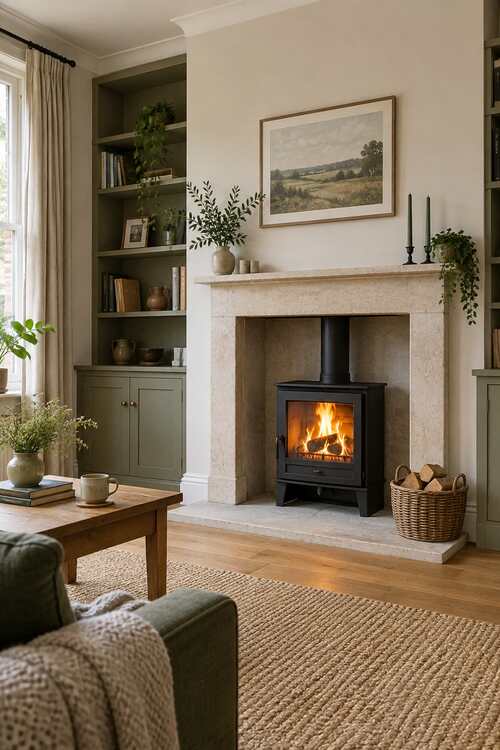
Choose the output and fuel system your room and chimney can support—not a generic “best” stove. This four-model shortlist spans a compact 5kW wood burner, a wide-view 5kW model, a conditional multi-fuel option and a 7.3kW stove for rooms with a demonstrated higher heat demand. We have not installed or hands-on tested them; the current maker manual, appliance plate, qualified survey and official exemption entry take precedence over any marketplace claim.
Smoke-control exemption is not the same as Ecodesign compliance. A listed stove can burn the specified wood logs in a smoke-control area only in the exact approved configuration and with every required stop or operating condition met. Do not assume a seller’s “DEFRA approved” badge verifies the delivered setup.
Start with the fit
Saltfire ST1 for a compact 5kW wood-only installation
Its 460 × 495 × 310mm body is the smallest documented shape here. That does not make it suitable for every recess: the manual calls for 400mm side and 500mm rear clearance to combustible materials, a 125mm flue and sweep access. Check the air-control stops required by its exact exemption entry.
Best Wood-Burning Stoves UK at a glance
| Exact configuration | Output, footprint and installation | Reason to buy / limitation |
|---|---|---|
| Saltfire ST1 | 5kW wood logs; 460W × 495H × 310D mm; 78.7% at nominal output in the newer maker-authored manual; 125mm flue. Minimum combustible clearance: 400mm sides / 500mm rear. Register requires 22mm airwash and 50%-open secondary stops. | Buy: A short 495mm body and 125mm flue give a relatively compact 5kW installation route. Limit: The 500mm rear combustible clearance can rule out a shallow fireplace; sweep access must be planned with the installer. |
| Charnwood Aire 5 Low Stand | 5kW wood logs; 470W × 600H × about 400D mm without optional heat shield; 84% efficiency; 150mm flue. Minimum combustible clearance with single-wall flue: 350mm side / 350mm rear. Register requires factory-fitted 10mm secondary and 9mm tertiary stops. | Buy: The larger glass, UK-made construction and optional heat-shield installation route offer a different 5kW choice from a small-box stove. Limit: Its 150mm flue and heavy body may make an existing 125mm chimney installation costly; reduced rear clearance needs both insulated flue and optional heat shield. |
| Arada Farringdon Small Eco | 5kW / 77.8% net on wood; 4.9kW / 82.4% net on tested solid fuel. 495W × 638H × 362D mm; 127mm flue; single-wall-flue combustible clearance 500mm side / 350mm rear. Register permits wood logs only under its exemption. | Buy: Its separate wood and mineral-smokeless-fuel data help buyers who genuinely need two authorised fuel routes. Limit: The optional solid-fuel grate bars and smoke-exemption stop must be confirmed for the ordered configuration; the current manual says the stop is left off at manufacture. |
| Saltfire ST3 | 7.3kW wood logs; 520W × 510H × 340D mm; 76.3% at nominal output in the newer maker-authored manual; 125mm flue. Minimum combustible clearance: 400mm sides / 475mm rear. Register names the ST3 and its July 2015 instruction edition. | Buy: The distinct 7.3kW nominal output can serve a room whose heat-loss calculation genuinely exceeds a 5kW stove. Limit: It risks overheating a modest or insulated room, and its clearance and ventilation plan still need a qualified survey. |
On a phone, swipe sideways to compare every column.
How we chose and what we excluded
The former six included five Saltfire or Ekol models; the official register identifies Saltfire Stoves Ltd as the Ekol manufacturer too. We kept two Saltfire models only because their nominal outputs address different heat-loss results. Charnwood adds a larger-view 5kW wood system with different flue and optional heat-shield implications; Arada adds a documented mineral-smokeless-fuel route, but only after checking the ordered grate and exemption stop. These are distinct installation decisions, not a brand quota.
The Carron “Eco 2022 Revolution” listing does not establish whether it matches the register’s separate Carron Revolution or Carron Eco 5kW SE entries. Ekol Clarity 5, Ekol Adept and Saltfire ST-X5 did not add a sufficiently distinct, verified route beyond these four. We therefore removed their recommendations rather than transfer a family’s exemption to an unconfirmed variant.
Best compact wood-only stove
1. Saltfire ST1
Verified fit and performance: 5kW wood logs; 460W × 495H × 310D mm; 78.7% at nominal output in the newer maker-authored manual; 125mm flue. Minimum combustible clearance: 400mm sides / 500mm rear. Register requires 22mm airwash and 50%-open secondary stops.
Choose it if
A short 495mm body and 125mm flue give a relatively compact 5kW installation route.
Limitation
The 500mm rear combustible clearance can rule out a shallow fireplace; sweep access must be planned with the installer.
Before ordering: Confirm the delivered ST1 has the register’s airwash and secondary mechanical stops, and that the installation provides adequate sweeping access. Ask the installer to check the actual flue, hearth, ventilation and clearances against the current manual.
Maker instructions · Official exemption entry. The retailer listing confirms the offer identity; it is not installation approval.
Best wide-view 5kW wood stove
2. Charnwood Aire 5 Low Stand
Verified fit and performance: 5kW wood logs; 470W × 600H × about 400D mm without optional heat shield; 84% efficiency; 150mm flue. Minimum combustible clearance with single-wall flue: 350mm side / 350mm rear. Register requires factory-fitted 10mm secondary and 9mm tertiary stops.
Choose it if
The larger glass, UK-made construction and optional heat-shield installation route offer a different 5kW choice from a small-box stove.
Limitation
Its 150mm flue and heavy body may make an existing 125mm chimney installation costly; reduced rear clearance needs both insulated flue and optional heat shield.
Before ordering: Select the Low Stand, not the Store Stand, for this entry. The factory-fitted permanent air stops are an exemption condition; the optional heat shield changes the clearance calculation. Ask the installer to check the actual flue, hearth, ventilation and clearances against the current manual.
Maker instructions · Official exemption entry. The retailer listing confirms the offer identity; it is not installation approval.
Best conditional multi-fuel option
3. Arada Farringdon Small Eco
Verified fit and performance: 5kW / 77.8% net on wood; 4.9kW / 82.4% net on tested solid fuel. 495W × 638H × 362D mm; 127mm flue; single-wall-flue combustible clearance 500mm side / 350mm rear. Register permits wood logs only under its exemption.
Choose it if
Its separate wood and mineral-smokeless-fuel data help buyers who genuinely need two authorised fuel routes.
Limitation
The optional solid-fuel grate bars and smoke-exemption stop must be confirmed for the ordered configuration; the current manual says the stop is left off at manufacture.
Before ordering: The seller’s “DEFRA approved” label is not proof that the 23mm smoke-exemption stop is fitted. Arada’s current manual says it is left off at manufacture; the installer must confirm and fit it for wood use in a smoke-control area. The tested solid-fuel figures require optional grate bars, so confirm those separately. Ask the installer to check the actual flue, hearth, ventilation and clearances against the current manual.
Maker instructions · Official exemption entry. The retailer listing confirms the offer identity; it is not installation approval.
Best only where more heat is needed
4. Saltfire ST3
Verified fit and performance: 7.3kW wood logs; 520W × 510H × 340D mm; 76.3% at nominal output in the newer maker-authored manual; 125mm flue. Minimum combustible clearance: 400mm sides / 475mm rear. Register names the ST3 and its July 2015 instruction edition.
Choose it if
The distinct 7.3kW nominal output can serve a room whose heat-loss calculation genuinely exceeds a 5kW stove.
Limitation
It risks overheating a modest or insulated room, and its clearance and ventilation plan still need a qualified survey.
Before ordering: Match the ST3 data plate and supplied instructions to the exact official entry. Choose this output only if the room-by-room heat-loss calculation supports it. Ask the installer to check the actual flue, hearth, ventilation and clearances against the current manual.
Maker instructions · Official exemption entry. The retailer listing confirms the offer identity; it is not installation approval.
Start with heat loss, not fireplace width
Five kilowatts is common, but it is not a universal answer. A draughty period room with large windows behaves differently from a compact insulated extension. Ask the installer to calculate the room’s heating requirement and explain the assumptions.
Oversizing encourages short, cool burns and an overheated room. Undersizing can lead to constant high firing. Both are poor substitutes for selecting the correct nominal output and operating range.
DEFRA exemption and Ecodesign are different
Ecodesign addresses efficiency and emissions for solid-fuel local space heaters. DEFRA exemption concerns burning otherwise unauthorised fuel such as wood in a smoke-control area. A stove can meet one requirement without automatically satisfying the other.
Check your address with the local council and search the exact model on the official exempt-appliance list. Exemption applies only to the exact listed model, permitted fuel and required conditions. Check the appliance plate and that any required air-control stop is fitted and set before burning wood in a smoke-control area.
Wood-burning or multi-fuel?
A dedicated wood burner has a firebox and airflow designed around logs. A multi-fuel stove normally adds a grate and ash handling for permitted smokeless fuels. “Multi-fuel” does not mean anything combustible can be used.
If you expect to burn only seasoned logs, do not pay for flexibility you will not use. If a second permitted fuel genuinely matters, confirm the supplied grate, any optional bars, instructions and smoke-control conditions for the exact configuration. Exemption for wood logs does not authorise every solid fuel.
Installation is part of the product decision
The appliance price is only one part of the project. The survey may identify chimney sweeping, lining, ventilation, hearth work, fireplace alteration or a new twin-wall flue. The route and termination of the flue can determine whether a particular stove is practical.
In England and Wales, a registered competent-person installer can self-certify qualifying work; otherwise Local Authority Building Control must be involved. The completed installation should include the required documentation, notice plate and carbon-monoxide alarm.
Hearth, clearances and ventilation
Do not copy distances from a photograph or another stove. The current appliance manual and Approved Document J govern hearth dimensions, flue requirements, air supply and protection from combustible materials.
Freestanding furniture, curtains, log baskets and decorative timber also need safe positions. Future owners and chimney sweeps must be able to identify the appliance and inspect the installation.
Burn suitable dry fuel
Use clean wood permitted by the manual. In England, small retail quantities should carry Ready to Burn certification, confirming moisture content of 20% or less. Store logs so they stay dry and ventilated.
Never burn painted, treated or glued timber, household waste or fuel outside the appliance instructions. Poor fuel increases smoke, deposits and maintenance while undermining the performance you paid for.
Cleaning and ongoing safety
Have the chimney swept at intervals appropriate to the fuel and use, and service the stove as recommended. Check door seals, firebricks, baffles and air controls rather than waiting for obvious failure.
Test the carbon-monoxide alarm according to its instructions and replace it at end of life. An alarm is an additional safeguard, not permission to ignore installation faults, blocked flues or poor ventilation.
Plan the wider renovation
- heating your home — compare the stove with the wider heating strategy.
- choosing a fireplace — consider the focal point and room design around the appliance.
- chimney-breast alterations — understand the structural implications before changing an existing chimney.
- extension cost calculator — frame the stove, hearth and building work within the wider budget.
Frequently asked questions
What size wood-burning stove do I need?
Use a room-by-room heat-loss calculation that considers floor area, ceiling height, insulation, glazing and ventilation. Do not choose output from room dimensions alone.
Can I install a wood-burning stove myself?
A solid-fuel installation must comply with Building Regulations. In England and Wales, use an appropriately registered competent installer or arrange approval through Local Authority Building Control.
Do I need a DEFRA-approved stove?
If you burn wood in a smoke-control area, you generally need an exempt appliance and must follow its exact model entry, permitted fuel, manual and any required air-control-stop conditions. Confirm your local status and the appliance configuration.
What does Ecodesign mean for a wood-burning stove?
Ecodesign sets minimum efficiency and maximum emission requirements for solid-fuel local space heaters placed on the market under the applicable rules. It is not the same as DEFRA exemption.
Do I need a carbon-monoxide alarm with a log burner?
Approved Document J says a new or replacement fixed solid-fuel appliance in a dwelling should have a suitable carbon-monoxide alarm in the same room. It does not replace correct installation and servicing.
What wood should I burn in a stove?
Use the fuel permitted by the appliance instructions. In England, small retail volumes of firewood must be certified Ready to Burn, indicating moisture content of 20% or less. Never burn treated or painted timber.
Our verdict
Start with the heat-loss survey and permitted fuel. The compact Saltfire ST1 and wide-view Charnwood Aire 5 Low are different 5kW wood-only installations; the Arada Farringdon Small Eco is a conditional multi-fuel choice whose optional grate and smoke stop must be confirmed; the Saltfire ST3 is only for a room that needs its 7.3kW output. None is automatically suitable for a smoke-control area on a retailer claim alone: match its exact data plate, manual, specified logs and exemption conditions before ordering.
As an Amazon Associate I earn from qualifying purchases.
Published: September 28, 2026