
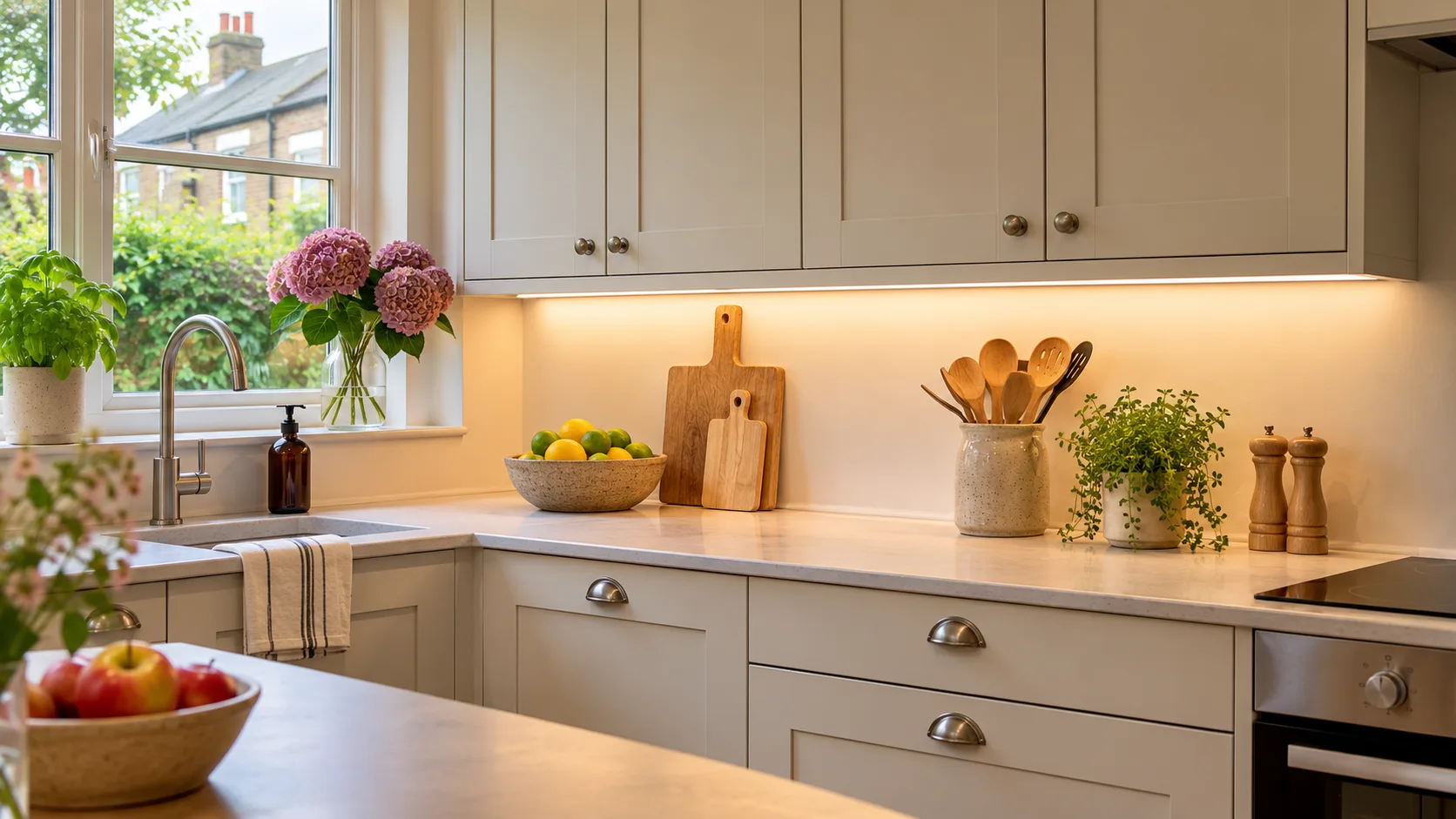
Under-cabinet lighting can make a real difference to how you use your kitchen, giving you a clearer view when you’re preparing food and a softer glow when the cooking’s done. Whether you’re planning a new kitchen or updating the one you have, there are options to suit both.
This guide explains how to choose under-cabinet lighting, from rechargeable lights you can add to existing cupboards to plug-in and hardwired fittings. We’ll help you compare light colour, brightness and controls, work out how much lighting you need and check which extras are included.
Decide whether it’s task light or a gentle glow
For the worktop where you prepare food, you’ll want the light to reach the surface without leaving a dark patch at a cabinet join. A display shelf or the inside of a pantry cupboard has a different job: a little light at the moment you open it may be enough. Mark the areas you actually use before choosing a pack of lights.
Our kitchen lighting scheme ideas cover the room as a whole. Here, we’re concentrating on the fittings beneath cabinets and what they need to work in an existing kitchen.
Rechargeable, plug-in or part of a planned lighting system?
| Type | Useful for | What to check |
|---|---|---|
| Rechargeable bar | A cupboard, shelf or short stretch with no convenient socket. | Light output, always-on runtime, charging access and whether the sensor suits the position. |
| Plug-in bar or strip kit | Adding more continuous worktop light to a finished kitchen. | UK plug, cable route, included connectors and the total length the supplied power unit supports. |
| Low-voltage cabinet system | A coordinated run with matched controls or several cabinet widths. | Compatible driver, connection leads, switch or remote and the system’s permitted total load. |
| Fixed-wiring installation | A renovation where the supply and switching are being designed together. | Fitting location, access for maintenance and a competent electrician for circuit work. |
A rechargeable light avoids trailing power leads, but charging becomes a regular task if you leave it on while cooking. A plug-in kit can work well in a finished kitchen if its cable can be routed neatly to a suitable socket. A built-in system can give a tidier result, but a light fitting on its own may not include the driver, lead or control needed to use it. IKEA’s kitchen lighting guide shows how those separate parts fit together in one system.
Measure the lit run, not just the cabinet width
Measure the underside of each wall cabinet and note gaps for a cooker hood, tall unit or open shelf. Decide where the light should stop, where a cable could go and whether cabinet joins need connectors. A single bar that matches one cupboard won’t automatically light the next one.
For example, three 60cm cabinets give you 180cm of cabinet fronts, but that doesn’t mean one 180cm strip is the right order. The fittings may come in shorter sections, need a connection lead at a gap, or require a driver with enough capacity for the combined wattage. Check the exact fitting instructions and package before buying. IKEA’s kitchen lighting buying guide illustrates why cabinet width, driver and connecting leads have to be planned together.
Look at the light on the worktop
A strip or linked bars give a more continuous line across the preparation area; separate spots create pools of light. Neither is automatically better. Think about whether you’re trying to see clearly while chopping or just adding a softer light for the evening. Sensio’s under-cabinet guide explains the different effects of spots and strips.
Colour temperature tells you how warm or cool the white light appears. If you already have warm pendants, a very cool strip may look out of place; switchable white can help when you’re not sure. Check the stated lumens too, but don’t compare one light’s total output with a multi-light kit as though they illuminate the same area. A diffuser or profile can hide visible LED dots and soften the line of light.
Try to picture the light reaching the worktop, rather than shining straight into your eyes from a seat across the kitchen. Check the fitting’s mounting guidance and test a removable option in position before making permanent holes.
Check the complete kit and keep the electrical work in scope
Before ordering, make a small parts list: each light, the correct power supply or driver, connection leads, switch or sensor, mounting pieces and a route to power. Check the manufacturer’s limits on how many lights can be connected. For rechargeable models, check whether the charging cable is supplied and whether a USB wall plug is needed separately. A motion sensor under a cabinet may behave differently from one inside a cupboard, so check its detection direction and day/night setting.
If you’re attaching a complete rechargeable or plug-in product, follow its supplied mounting and cable instructions. Keep leads away from heat and water, and use a fitting only where its stated rating permits it. Don’t treat a low-voltage lamp as permission to alter the fixed electrical supply yourself. Electrical Safety First’s DIY advice recommends competent help for electrical installation; if you’re adding wiring or a circuit, plan that with an electrician.
Once you’ve settled on the type, our under-cabinet lighting comparison can help you look at complete kits and individual fittings. If you want a light you can remove to charge, see the separate rechargeable under-cabinet light choices when that guide is available.
Frequently asked questions
Are rechargeable under-cabinet lights bright enough for food preparation?
They can help with a short, occasional task, but output and battery life vary. Check the stated light output and always-on runtime for the exact model, and look at the worktop in use before relying on one as your main task light.
Do plug-in under-cabinet lights need an electrician?
A complete plug-in kit can usually be attached and plugged into an existing suitable socket by following its instructions. Work on a fixed electrical circuit is different; use a competent electrician for that installation.
Should I choose a light strip or spotlights?
A strip or linked bars can give a more continuous line of light along a worktop. Spotlights create separate pools of light and can suit display areas. The best choice depends on the cabinet layout and the surface you want to illuminate.
What does colour temperature mean for kitchen lighting?
It describes whether white light looks warmer or cooler. Compare a sample with your existing kitchen lights and finishes; a switchable-colour model gives you a way to decide after fitting.
Can I put under-cabinet lights above the hob or sink?
Only use a fitting where its instructions and rating permit that location. Heat, steam and splashes make those spots different from a dry worktop run; ask a competent installer when the suitability is unclear.