
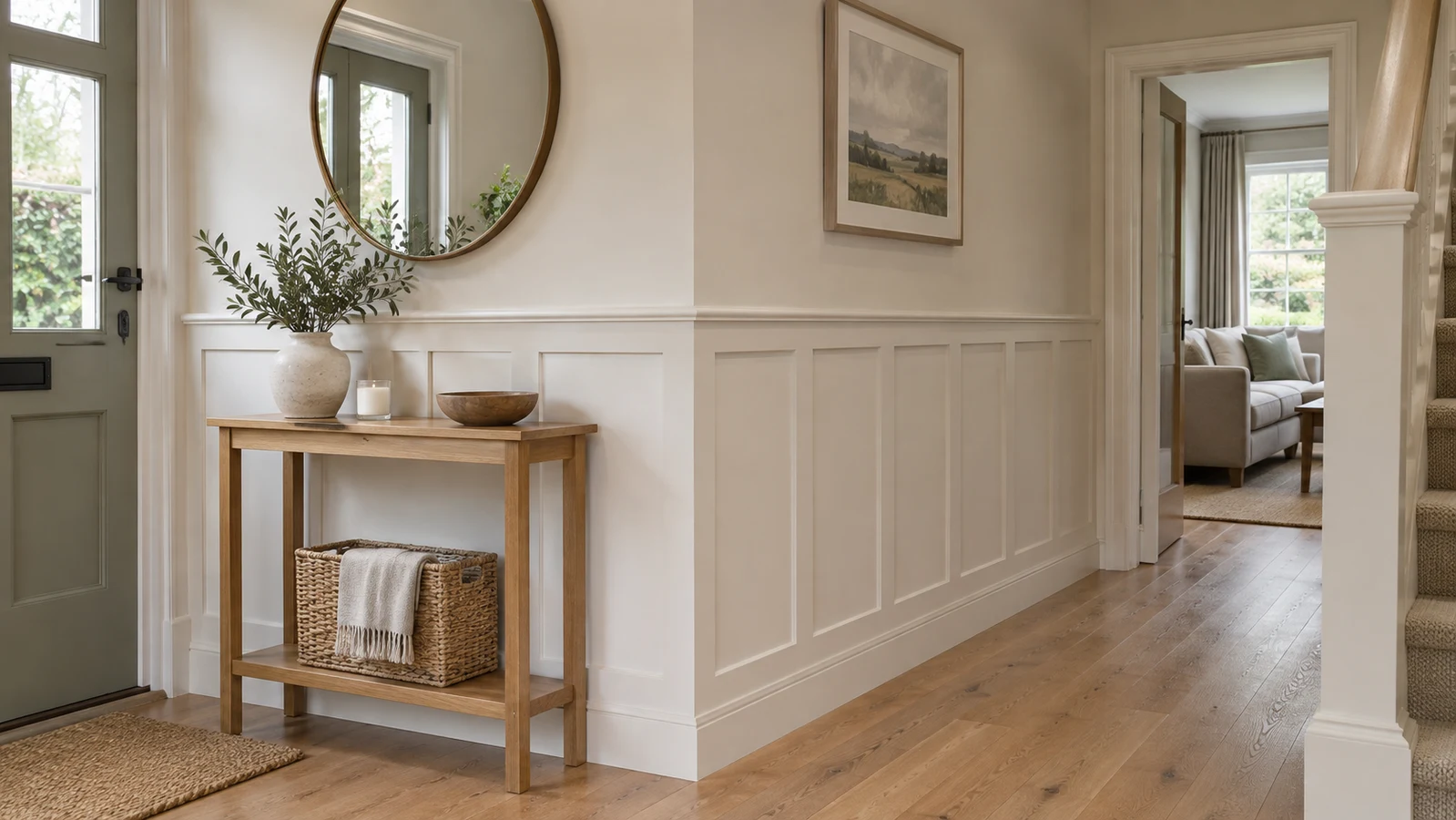
That plain stretch of hallway wall may be calling out for a little detail, but the choice between strips, routed sheets and a ready-made kit isn’t always obvious from the photos. MDF panelling can give you a neat painted finish without the grain of solid timber; the right format depends on the wall, the look you want and how much cutting you’re happy to do.
This guide explains the main MDF panelling styles, what to measure and how to build a realistic budget. If you already know you want a supplied layout, our MDF wall panelling kit comparison looks at that buying decision. For a design using your own strip spacing, see our Shaker-style MDF strip comparison.
Affiliate disclosure: The image credits below contain affiliate links. If you buy through one, Love Renovate may earn a commission at no extra cost to you.
Which MDF panelling style suits your wall?
| Style | What you see | Useful for | What to check |
|---|---|---|---|
| Shaker or board-and-batten | Flat strips forming rectangular openings over the existing wall | A half-height hallway or a feature wall where you want to choose the spacing | The wall shows through each opening, so its surface needs to be sound and smooth |
| Tongue-and-groove or bead-and-butt | Closely joined vertical boards with a repeating groove | A continuous lower wall with fewer exposed areas of the old wall | Panel width, top trim and how you’ll finish the ends |
| Routed sheet | A large MDF board with the pattern cut into its face | A consistent design across a broad, flat area | Sheet size, weight, joints and the manufacturer’s fixing method |
The names aren’t always used consistently. Look at the actual construction and dimensions before ordering: a set of Shaker strips attached to plaster is different from a full MDF sheet with grooves machined into it.
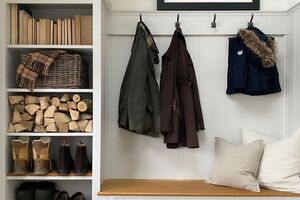
Shaker-style panelling

Tongue-and-groove panelling

Routed-sheet panelling
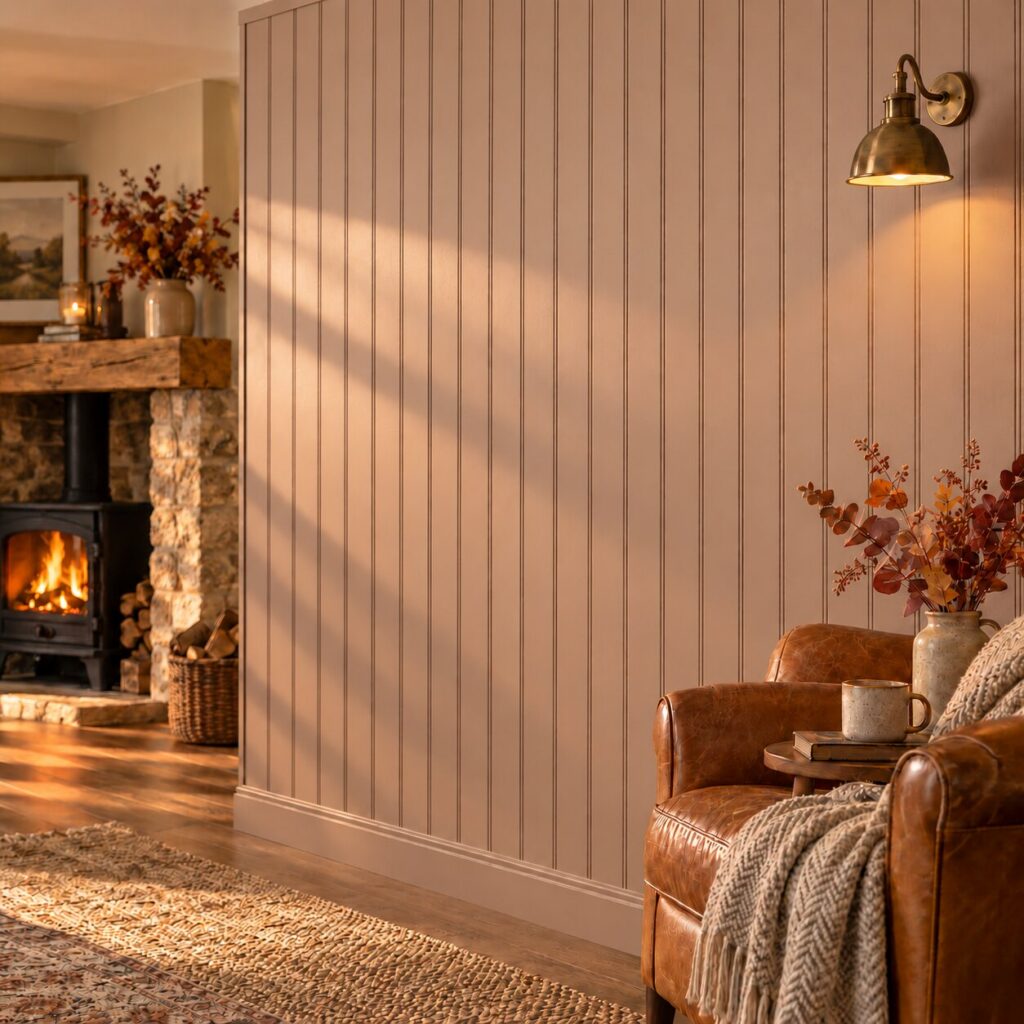
Loose strips, routed sheets or a measured kit?
Loose strips give you the most control
You can set the height and number of openings to suit a wall with awkward corners or a radiator. You’ll need to draw the layout, count every vertical and horizontal piece and allow for your own cuts. A pack length isn’t the same as the width of wall it covers: the pattern decides how many strips you’ll use.
A routed sheet reduces layout work
The grooves are already spaced, so you’re choosing a pattern rather than building each rectangle. Large sheets still need careful handling and a fixing method suitable for their weight and your wall. Ask how adjoining sheets line up, especially on a long run.
A made-to-measure kit removes some cutting
A kit may include cut lengths, rails or a design plan, but contents vary. Some cut-to-size Shaker kits let you specify wall dimensions and choose priming and trims; adhesive may be an add-on rather than something in the box. Compare the actual basket, not the phrase “all-in-one”.
Choose the board and finish for the room
For a dry bedroom or living room, standard interior MDF may be suitable when properly finished. In a room with higher humidity, check whether the product is moisture-resistant MDF and whether its manufacturer permits that location. Moisture-resistant doesn’t mean waterproof or suitable inside a shower enclosure. The European Panel Federation’s MDF guidance describes moisture-resistant grades for humid interiors and occasional wetting, with appropriate finishing still important.
A pre-primed panel can save preparation time, but look at the instructions for cut edges, joints and the paint you plan to use. With bare MDF, don’t assume a decorative topcoat will seal raw edges on its own. A smooth finished wall also depends on the condition of the surface underneath: paint that’s peeling, loose plaster or damp needs attention before panelling goes up.
What will MDF panelling cost?
A 2m MDF wall panelling kit can start at around £60 for the panelling itself. That’s a guide to the kit cost, not a price for a finished wall: the style, height, number of kits and trims you choose will all affect what you spend.
For your own budget, add the exact number of packs or strips your cut list needs, delivery to your postcode, any adhesive or mechanical fixings specified for the product, filler or caulk if needed, primer and paint. Allow for the wall’s ends, corners and any unavoidable waste. A made-to-measure kit may cost more upfront but reduce cutting and unused material; loose strips may be economical when you can use their lengths efficiently. Check current prices and delivery before buying.
A few checks before you order
- Mark the finished height. Check where the top rail lands beside sockets, switches, door frames and skirting, and make sure its projection looks right against existing trim.
- Draw the openings. For Shaker panelling, the space you see between strips is smaller than the overall repeat once strip widths are included. Sketch the whole wall before deciding how many pieces to buy.
- Check the wall and fixing method. Follow the panel and adhesive manufacturers’ instructions for the substrate. Adhesive-only fitting isn’t automatically right for a heavy sheet or a damaged wall.
- Plan cuts safely. Ordering pre-cut pieces can reduce dust. The HSE explains why cutting and sanding wood-based board needs effective dust control. If you’ll drill or nail near a socket, check for hidden cables and get competent help for electrical alterations.
Once you’ve settled on a style, make a full wall sketch and cut list before checkout. It’s the quickest way to spot a short strip, an awkward join or a rail that collides with a switch.
Frequently asked questions
Is MDF panelling the same as wall panelling strips?
No. MDF is the board material; the panelling might be loose strips, joined boards or a routed sheet. Check the product’s construction and dimensions rather than relying on the category name.
Can I use MDF panelling in a bathroom?
Some moisture-resistant MDF products are intended for humid interiors, but suitability depends on the exact product, finishing and location. They aren’t automatically waterproof shower panels. Follow the manufacturer’s room and sealing instructions.
Do I need to prime MDF panelling before painting?
Check whether your exact product is supplied primed. Bare MDF and cut edges usually need the preparation specified by the panel and paint manufacturers before the decorative coat.