
Your Guide To Optimising A Small Work From Home Space

Share
X
Copy Link
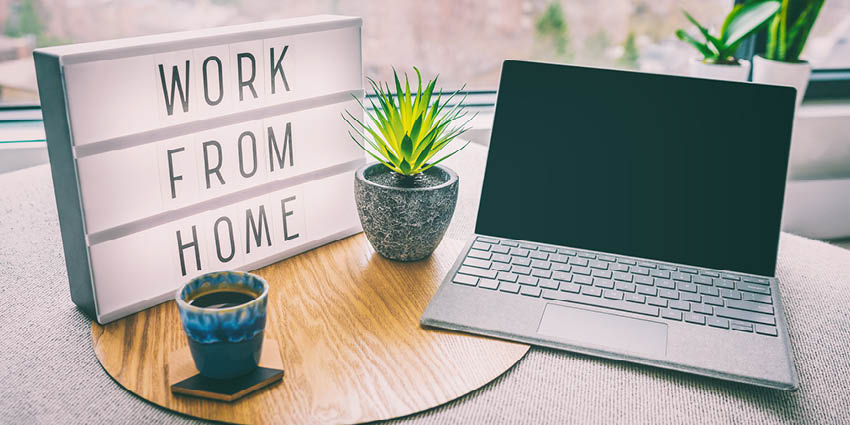
Not everyone renovating for a home office has a spare room to work with. For a lot of households, the "office" is a landing, an alcove under the stairs, a corner of the bedroom, or a converted cupboard barely big enough for a desk. The good news is that a small footprint doesn't have to mean a compromised workspace. With the right planning, even the tightest corner can support a genuinely productive day's work.
Here's our guide to getting a small home office working harder for you.
Start With What The Space Actually Needs To Do
Before choosing furniture or finishes, it's worth working out exactly what the space needs to handle day to day. Is it purely for laptop work, or does it need to store paperwork, equipment, or supplies for a home-based business? A workspace used for an hour of emails looks very different to one that's someone's full-time job.
Getting clear on this early avoids the common renovation mistake of squeezing in furniture that looks the part but doesn't actually match how the space gets used.
Storage Is The First Thing To Plan, Not The Last
In a small home office, clutter builds up fast, and clutter is one of the quickest ways to undermine focus. Rather than treating storage as an afterthought, it's worth designing it in from the start.
This is where lockers earn their place in a home office, and not just in shared or commercial settings. A slim locker unit gives paperwork, chargers, stationery and personal items a proper home, keeping the desk itself clear for actual work. Lockers also bring a practical benefit that open shelving doesn't: closed doors. In a small space that might double as a hallway, landing or spare corner of a living area, being able to shut everything away at the end of the day makes the room feel calmer and more multi-purpose, rather than permanently looking like a workspace.
For anyone sharing the space with a partner or using it flexibly for other tasks, lockers also help keep work items separate and organised, without needing a room's worth of shelving to do it.
Choose Furniture That Earns Its Footprint
Every piece of furniture in a small office needs to justify the space it takes up. A slim, wall-mounted or fold-down desk can make a real difference in the tightest spots, while multi-purpose pieces, such as a storage unit that doubles as a seat, help a small room do more without feeling crowded.
The chair, however, isn't somewhere to compromise for the sake of saving space. A fold-up or lightweight seat might seem like the practical choice in a tiny office, but if you're working from it for several hours a day, comfort has to come first.
Why The Chair Matters More In A Small Office, Not Less
It's tempting to assume that a compact workspace calls for compact furniture across the board, but seating is the exception. Ergonomic office chairs are designed to properly support the body through long periods of sitting, and that support matters just as much, if not more, in a small home office where there's less room to get up, move around, or work from a different spot when discomfort sets in.
When choosing an ergonomic chair for a tight space, look for:
- A slimmer profile that still includes proper lumbar support, so it fits the room without sacrificing comfort.
- Adjustable height and seat depth, to make sure the chair suits the person using it and the desk it's paired with.
- Armrests that adjust or fold away, which can help the chair tuck neatly under the desk when not in use.
- A design that doesn't dominate the room visually, so the office still feels like part of the home rather than an obvious workstation.
Getting the chair right pays off in a way that's easy to underestimate. Discomfort in a full-sized office can be solved by getting up and moving to another seat for a while; in a small home office, there often isn't that option, which makes proper ergonomic support even more important.
Light And Layout Still Matter, Even In A Small Footprint
A small office benefits enormously from good light, whether that's positioning the desk near a window or adding a well-placed lamp for darker days. Layout matters too: even in a compact space, keeping the desk, storage and chair within easy reach of each other reduces unnecessary movement and helps the room feel more efficient rather than cramped.
Final Thoughts
A small home office doesn't need to feel like a compromise. With the right planning, thoughtful use of lockers to keep the space clear, and a proper investment in ergonomic office chairs to keep the person using it comfortable, even the smallest corner of a home can become a genuinely productive place to work. As with any renovation project, the details that matter most are often the ones that don't show up in photos, but make all the difference once the space is actually being used.
Published: September 16, 2026

 Sign up with Facebook
 Sign up with Google
