
Clearing up wood shavings after a DIY job is one thing; emptying a tank of loose dust is another. With a wet and dry vacuum, a collection bag can make dry clean-up less messy, while going bagless may suit coarser debris and liquid pick-up. This guide explains when each setup helps and what to check before switching between them.
What does a collection bag actually do?
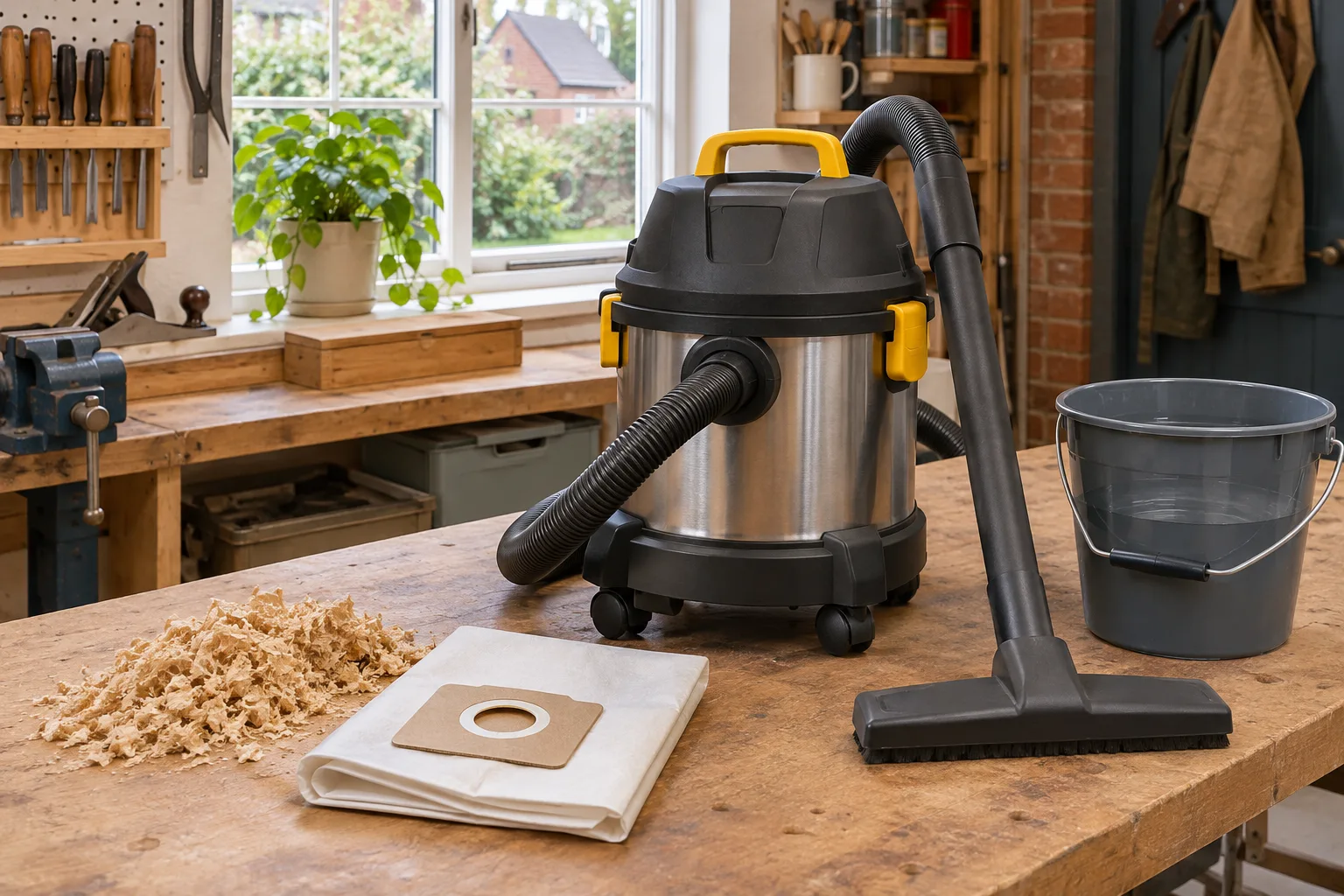
A bag sits inside the tank and holds dry waste. When it is full, you remove and dispose of it rather than tipping loose debris out of the container. That can make ordinary DIY tidy-ups more convenient, especially when the waste includes fine particles. It does not replace the vacuum's filter, and it does not give an unclassified machine a dust-safety rating.
Not every wet and dry vacuum uses the same arrangement. Some accept a paper or fleece bag alongside a cartridge filter; others have a different filter setup. Check the manual for the exact model before fitting a bag, changing a filter or collecting a spill.
Bagged or bagless: which suits the job?
For dry, fine debris that your machine is designed to collect, a compatible bag often makes emptying tidier and helps keep material out of the tank. Kärcher recommends a bag for fine dry dust on several of its home wet and dry vacuums. That is advice for those models, not a rule that makes every vacuum suitable for fine construction dust.
For coarser, ordinary debris, a bagless setup may be practical where the manufacturer permits it. You can tip the tank out without buying a new bag each time, but emptying loose material can be messier. Take care not to create a dust cloud. If the material could be hazardous, don't rely on this disposal method or on an ordinary wet and dry vacuum.
Liquid pick-up is the clearest case for removing a dry collection bag. Kärcher's WD 5/6 instructions say not to vacuum wet material with a filter bag fitted. Nilfisk's Buddy II guidance also shows the bag being removed for liquid pick-up. The filter or foam arrangement may still differ between machines, so follow your own manual.
| Job | Usual bag choice | What to check |
|---|---|---|
| Ordinary dry shavings and grit | Bag if you want tidier disposal; bagless if your model allows it. | Compatible bag and filter setup. |
| Fine dry dust | A bag may help with disposal, but it is not a safety rating. | Whether the entire machine is suitable for the material and task. |
| Water and wet dirt | Remove the dry collection bag where the manual requires it. | Wet filter setup and liquid fill limit. |
Changing from dry debris to a spill
Switch the vacuum off and unplug it before opening the tank. Remove the dry bag if the manual says to, then check that the filter and nozzle are configured for wet use. Keep the plug, socket and cable away from the liquid. A wet and dry label doesn't mean the machine is suitable for every fluid: do not collect flammable liquids or unknown substances unless the instructions specifically permit them.
Don't fill the tank by guesswork. Some machines have a float that reduces suction when the liquid limit is reached; that is a prompt to switch off and empty the tank, not a reason to keep going. When you finish, empty and dry the container and any washable parts as directed. Let a washed filter dry fully before returning to dry debris.
Think about the cost and storage of bags
A bag adds a recurring cost, so check that replacements for the exact model are easy to buy. Paper and fleece options may have different uses, and an ill-fitting bag can come loose or block airflow. Don't assume a bag from a similar-looking vacuum will fit. If you only use the machine occasionally, keep spare bags somewhere dry and note the model number before you need more.
A bagless tank avoids those consumables for permitted jobs, but the filter still needs checking, cleaning and eventual replacement. Follow the manufacturer's maintenance instructions and avoid brushing or blowing accumulated dust into the air. A drop in suction can mean the bag is full, the tank needs emptying, or the filter or hose is blocked; check each in the order the manual recommends.
Neither choice solves construction-dust safety
Fine dust from cutting, sanding or chasing can remain airborne and may contain harmful materials. The Health and Safety Executive's guidance on on-tool extraction says to select an appropriate M- or H-class extraction unit for many construction-dust tasks; an L-class unit is only for lower-toxicity dusts such as gypsum in plasterboard. It warns against treating a HEPA filter fitted to a general commercial vacuum as a substitute. A dust bag does not change that distinction.
If you don't know what the dust contains, pause before cleaning it up. The right approach depends on the material and how the work is being done. For the broader choice of tank size, filters and power-tool connections, see our wet and dry vacuum buying guide. For six general-purpose home options, see the wet and dry vacuum comparison; its picks are not recommendations for hazardous-dust extraction.
Frequently asked questions
Do I need a bag for dry use?
Not always. It depends on your vacuum and the debris. A compatible bag can make dry waste easier to dispose of, while some models allow bagless collection for ordinary coarse debris. Follow the manual for the filter and bag combination.
Can I leave the bag in when vacuuming water?
Many wet and dry vacuums require the dry collection bag to be removed before liquid pick-up. Check the exact model's instructions and its wet filter arrangement before you start.
Does a bag make a vacuum safe for plaster or masonry dust?
No. A bag helps collect waste, but it does not determine the machine's dust class. Assess the material and use extraction appropriate to the task; don't assume a general-purpose wet and dry vacuum is suitable for fine construction dust.
Is bagless cheaper?
It can avoid buying collection bags for jobs the machine permits, but filters still need maintaining and replacing. Compare replacement-bag and filter costs for the exact model, alongside how often you'll use it.