
Creating Stylish Entrances With Contemporary House Name Signs

Share
X
Copy Link
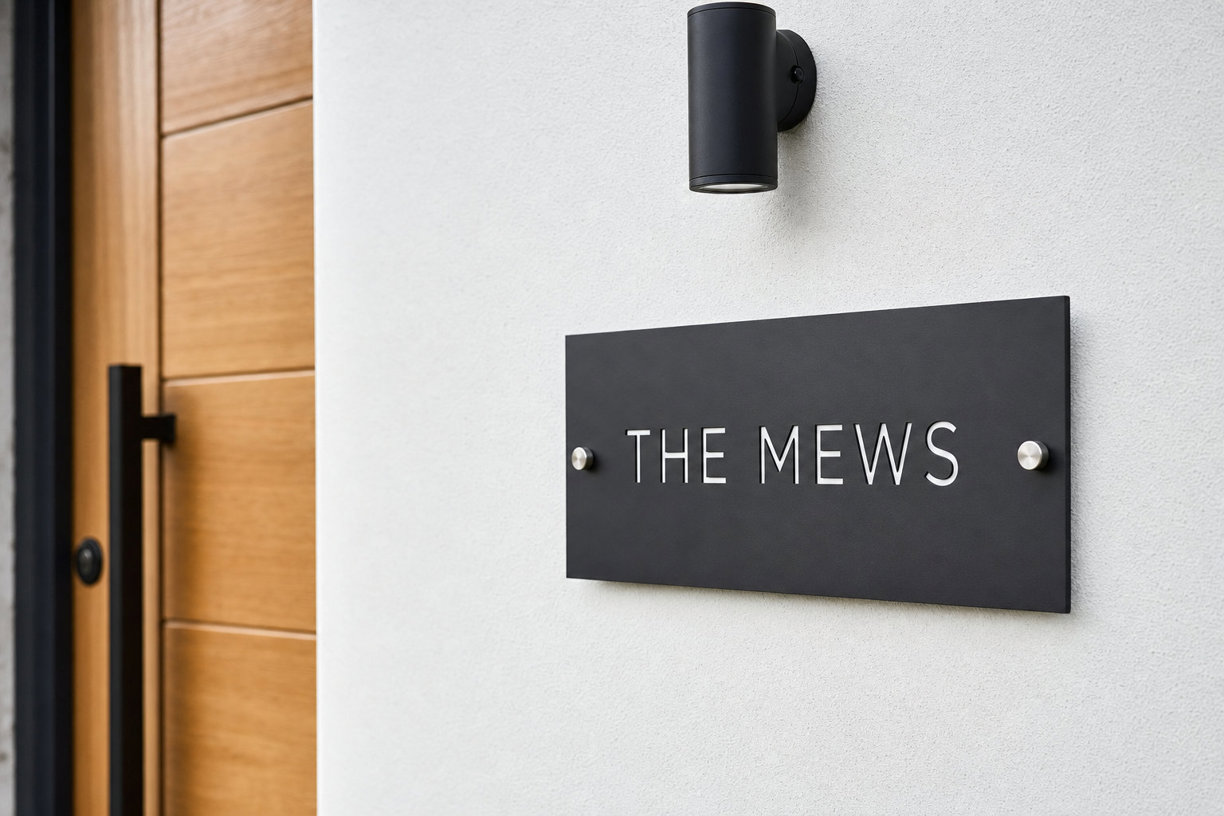
Entrance details often set the initial tone for any home renovation, influencing both kerb appeal and daily experience. Modern house name signs offer a straightforward way to refresh your exterior while complementing new finishes and architectural improvements. Carefully chosen signage can turn an ordinary entryway into a memorable feature tailored to your individual taste.
Home renovations often emphasise large-scale changes such as new paint, doors, or landscaping, but the smaller finishing touches frequently create the most lasting first impressions. Integrating a house sign from Signomatic, for instance, can transform the way guests and passers-by perceive your property, adding subtle style while supporting clear identification. On the Signomatic platform, visitors can browse a diverse selection of house sign options, exploring materials like metal, acrylic, and composite, and tailoring the design to complement existing finishes. The site also provides tools to customise fonts, sizes, and shapes, making it convenient to coordinate a new sign with the broader scope of your exterior improvements. As more homeowners look to balance individual design expression with practical considerations during refurbishment, modern house name signs have become increasingly prominent in exterior makeovers. These details not only highlight your unique preferences but also promote visual harmony and effective wayfinding as part of a comprehensive enhancement plan.
Situations when a new sign transforms renovations
Renovations often prompt homeowners to consider how each update contributes to the overall appearance and functionality of their exterior spaces. After repainting or rendering, introducing a fresh house name sign provides a finishing touch that draws attention to your newly enhanced façade. This approach holds true for major updates such as porch construction, new front doors, or landscaping projects, where the sign becomes an integral part of the renewed entrance composition.
Coordinating a modern house name sign with other exterior fixtures is an underappreciated aspect of well-executed renovations. When selecting lighting, door furniture, or planter arrangements, the opportunity arises to align visual elements and materials for a cohesive effect. Positioning the sign as a design component within this curated mix ensures that it neither clashes with nor gets overshadowed by other features, creating a more harmonious frontage.
Selecting a sign style for the property’s character
Modern design offers diverse sign styles, allowing you to choose options that enhance the uniqueness of your home without overwhelming its architecture. Contemporary minimalist designs, often composed of crisp lines and neutral colours, suit properties with sleek exteriors. For homes with softer or transitional elements, opt for signs featuring gentle shapes or textured finishes that create a welcoming impression while retaining modernity.
To maintain authenticity, it’s important to match the house name sign to key architectural cues rather than enforcing a themed or contrasting look. Echoing the tones, shapes, or finishes already present on the exterior helps reinforce design continuity. When selecting fonts or ornamental details, balancing individuality against everyday legibility ensures visitors and delivery services can easily identify your property.
Understanding material options and long-term performance
Sign materials for exterior use must withstand a widely varying climate. Metal signs, such as stainless steel or powder-coated aluminium, are favoured for their weather resistance and longevity, maintaining appearance through seasonal cycles. Non-metal options, including acrylic and stone-effect composites, offer versatility and can closely resemble natural materials without requiring intensive upkeep.
Practical concerns around durability often centre on how signs perform under exposure to sun, rain, and environmental pollutants. Materials described as weather resistant can help reduce UV fading, corrosion, and staining, preserving both legibility and design appeal. Where finishes are concerned, matte surfaces reduce glare and fingerprints, while gloss or polished variants might suit brighter, more contemporary settings.
Key choices for legibility and visual impact
Site-specific considerations, such as viewing distance and approach angle, influence the optimal dimensions for a house name sign. A smaller sign on a setback wall may be easily missed, while oversized lettering can overwhelm the entry. Maintaining readable proportions helps the sign stand out against the exterior without overpowering the overall look.
Colour contrast plays a crucial role in visibility both during the day and after dark. For clarity, general signage guidance suggests pairing light backgrounds with darker lettering or vice versa, while avoiding low-contrast combinations that can become illegible under different lighting conditions. Typeface choice also matters: sans-serif fonts and clear scripts are recommended, as elaborate or thin strokes may hinder readability for visitors or delivery drivers.
Placement strategies and attachment best practices
Choosing the correct location for your modern house name sign enhances attention and usability while protecting the sign from damage. Prime mounting points include a gatepost, wall near the entrance, porch pillar, fence, or directly beside the front door, depending on the property’s approach and landscape layout. Placement should be visible from the street but not vulnerable to accidental knocks or environmental extremes.
Installation methods are determined by the surface: brick or rendered masonry usually require appropriate fixings and anchors, while timber or composite cladding need screws matched to material strength. When managing drills or fasteners on fragile substrates, care must be taken to prevent water ingress, thermal movement, or cracking, as these can affect the sign’s retention and condition.
Lighting details and after-dark visibility options
Good exterior lighting enhances both the practicality and visual prominence of a house name sign. If your entry already features downlights or porch fixtures, consider aligning the sign’s installation for maximum illumination. Soft or diffuse lighting usually provides better results than strong spots, reducing harsh shadows and preventing excessive glare that might hamper legibility after dark.
Incorporating subtle reflective elements on the sign surface can further aid night-time visibility. Carefully applied, these features catch car headlights or street lamps without adding to overall brightness in a way that might detract from a cohesive entrance. By keeping lighting consistent in tone and avoiding over-lit or patchy effects, the updated sign integrates seamlessly into the property’s evening presence.
Personalisation choices that remain classic over time
Individualising your modern house name sign is easy, but restraint ensures the design remains relevant as style preferences evolve or when you next update the property’s exterior. Adding a family name, house title, or understated motif enables expression without overwhelming the appearance. Combining motifs and fonts thoughtfully brings character while maintaining focus on legibility and clarity.
Secondary details such as discreet house numbers can help with navigation, but cluttering the sign with too much text or decorative pattern risks muddling its function. Aim for simplicity and proportion, as this approach provides flexibility should you repaint, rebuild, or adjust other entry features in future years.
Maintaining your sign and knowing when to refresh
Cleaning routines for modern house name signs depend on your chosen material. Metals typically require only a periodic wipe with a damp cloth and mild detergent to remove dust or streaks, while acrylic or composite versions might benefit from non-abrasive cleaners. Avoid harsh chemicals or rough sponges that could erode finishes or obscure text, especially for printed or painted designs.
Seasonal checks for movement, loose fixings, or moisture ingress into mounting holes are recommended, particularly at weather-exposed points of the frontage. If the sign shows persistent fading, corrosion, or cracking, replacing it may be the simplest option to maintain legibility and appearance. A well-maintained sign can remain a practical and attractive detail through multiple exterior updates.
Published: October 6, 2026


 Sign up with Facebook
 Sign up with Google
