
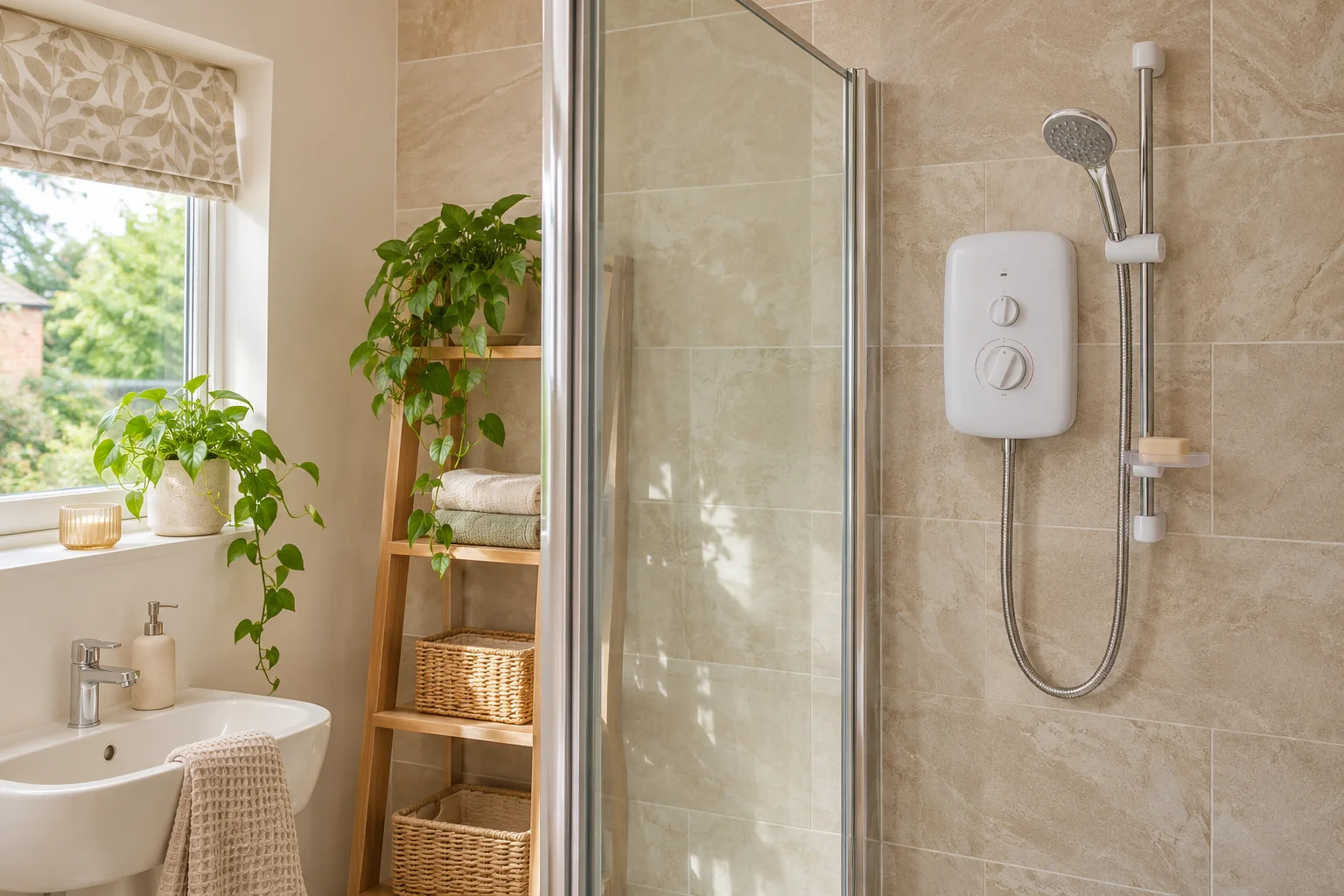
An electric shower heats cold water as you use it, so it's handy when the hot-water cylinder is small or the boiler is busy. Choosing a replacement isn't just a question of picking a finish or a higher kW number, though. This guide walks through the checks that make a shower suitable for your bathroom and your existing supply.
What an electric shower needs
Most electric showers take a cold mains-water feed and heat it inside the unit. That means they don't use stored hot water, but they do need enough working water pressure and flow, plus a suitable dedicated electrical circuit. A pumped electric shower for a tank-fed system is a different product; don't assume a standard mains-fed unit will solve a low-pressure setup.
8.5, 9.5 or 10.8kW: what changes?
The kW figure tells you how much electrical heating power a shower can use. A higher-rated unit can heat more flowing water to a given temperature, which can be useful when the incoming cold water is particularly chilly. It doesn't magically increase the pressure at the pipe. The actual spray still depends on the incoming supply, the handset and the temperature you choose.
A familiar 9.5kW unit can be a sensible starting point for a replacement, but even another 9.5kW model needs a circuit and water check. Moving from 8.5kW to 9.5kW—or to a 10.5/10.8kW model—is not a cosmetic swap. The cable size and route, protective device, isolator and other installation conditions must suit the exact new shower. Don't choose a rating by assuming the existing cable will cope.
Our best electric showers comparison shows the different ratings alongside the reasons to choose each model.
Ask for working pressure and flow, not just a number on the box
Minimum pressure in a manual usually means pressure while water is flowing, not a static reading with the tap closed. Check the exact model's minimum flow and pressure together. As an example, Aqualisa's eMotion data sheet gives a minimum of 0.85 bar for its 8.5, 9.5 and 10.5kW versions; another shower may ask for something different. Have the supply measured at the planned connection, particularly if taps elsewhere in the house affect the flow.
Winter can also make the shower feel different: colder incoming water needs more heating, so the flow may need to be lower to reach the same temperature. If your home uses a stored-water supply, discuss a model designed for that system with the installer rather than fitting a mains-only shower.
Have the electrical circuit checked before choosing the shower
An electric shower is a high-load bathroom appliance. Electrical Safety First advises using a registered competent electrician for bathroom electrical work. Ask them to check the dedicated circuit, cable size and route, protective device, RCD protection, earthing and isolation against the chosen shower's instructions and the rules for your part of the UK. A higher kW rating isn't automatically better if the circuit needs major work.
Keep electrical checks separate from water checks. A perfectly adequate mains supply doesn't establish that the circuit is suitable, and a suitable circuit doesn't make a low-flow water feed adequate.
Measure the old installation before ordering
Take a photo of the existing unit and note its exact model number and kW rating. Measure its cover and the space available for the new one, including the hose and rail. A wider faceplate might hide old fixing marks, but it won't necessarily cover the old cable or pipe openings.
Compare the new installation drawing with where the cold pipe and cable actually enter. Some showers have left-hand entries only; others allow several approved positions. For example, the Aqualisa eMotion data sheet shows entry options on both sides, while the Mira Sport 10.8kW specifies left-side water and cable entries. “Easy-fit” means more options to check, not a guaranteed match. Let the installer judge whether rerouting, sealing or making good is needed.
Which features are worth paying for?
A separate start/stop button lets you leave the temperature control where you like it. A multi-spray handset gives a choice of patterns, though it can't create more water pressure. A digital display can make settings easier to read; it doesn't remove the need for suitable water and power supplies. Phased shutdown flushes cooler water through after use on models that provide it. A thermostatic shower regulates outlet temperature more tightly, but check the exact model rather than assuming every digital control is thermostatic.
Check what comes in the box: handset, hose, rail, brackets, any second head and connecting hose. Use the supplied or manufacturer-approved handset, especially where the manual warns against a restrictive replacement head. If you're comparing finishes, remember that a black shower body may still come with chrome trim or a stainless-steel hose.
A quick order checklist
- Record the existing shower's model and rating, plus photos of the cable, pipe and fixing positions.
- Ask an electrician to confirm that the exact proposed model suits the circuit.
- Have the working cold-water pressure and flow checked against its manual.
- Compare body size, permitted service entries and rail height with the room.
- Confirm the exact colour, kW rating, head and fittings included in the selected package.
Once those checks are done, the main comparison helps narrow down a suitable model.
Frequently asked questions
Can I replace a 9.5kW shower with another 9.5kW model?
Not without checking. The rated load may match, but permitted cable and water entries, circuit requirements, dimensions and minimum working water supply can differ.
Will a 10.8kW shower give me better pressure?
It can heat more water at a given temperature if the electrical circuit and water supply suit it. It won't raise the pressure in the incoming pipe.
Do I need a pumped electric shower?
Only if the water system and the particular pumped model call for one. A pumped shower for stored cold water is not interchangeable with a standard mains-fed electric shower.
Can I fit an electric shower myself?
Bathroom electrical work and a high-load shower circuit need competent assessment and installation. Use a registered competent electrician and follow the manufacturer's installation instructions.