

A well-planned utility room takes noisy, wet and storage-heavy jobs out of the kitchen. The best layouts put the washing machine, sink, worktop, drying space and household storage into a clear sequence, without making the room difficult to walk through.
You do not need a large extension to create one. A narrow room, former pantry, section of a garage or tall utility cupboard can work when appliance doors, ventilation and everyday movement are planned first.

Small utility room ideas that use space well
In a compact utility room, start with the jobs the space must perform. Laundry usually needs an appliance zone, a surface for sorting or folding, storage for detergents and somewhere for damp items to dry. Add a sink only if it earns the plumbing and worktop space. Where only one appliance will fit, a washer dryer can combine both jobs, although capacity and cycle times still need checking.
Use the full wall height, but keep frequently used products between waist and eye level. Tall cupboards can hold a vacuum, ironing board and cleaning tools; shallow shelves are better for smaller bottles because nothing becomes lost behind a second row.


How much space do you need?
A single run can work in a room roughly the width of the appliances plus comfortable circulation, but do not design from nominal appliance width alone. Allow for hoses, sockets, skirting, door hinges and the full swing of appliance doors. Mark the layout on the floor and open an imaginary washer door before ordering cabinetry.
Stacking a compatible tumble dryer above a washing machine can release valuable floor space. Use the appliance manufacturer's approved stacking kit and check access to controls, filters and services. Do not place one machine on another without the specified fixing system.
Choose a utility room layout around the workflow
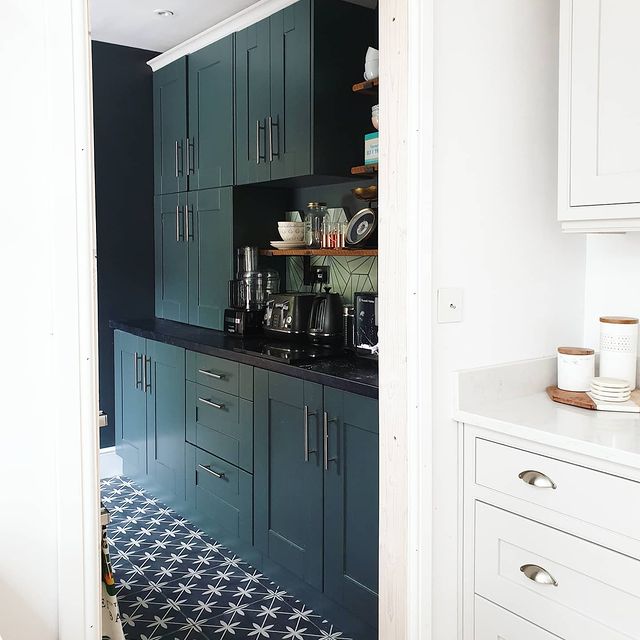
A straight run is efficient in a narrow room. An L-shaped layout adds a return for a sink or tall cupboard, while parallel runs provide more storage but need enough space between them for doors and people. A central island is worthwhile only in a genuinely large room; otherwise it turns a useful workspace into an obstacle course.
- Single-wall layout: best for narrow rooms and converted corridors, with appliances and storage kept in one organised run.
- L-shaped layout: useful when a second wall can take a sink, tall storage or folding area without narrowing the doorway.
- Galley layout: provides excellent capacity, but opposing doors and drawers must open without colliding.
- Utility cupboard: conceals laundry in a kitchen or hallway, provided ventilation, services and noise are properly addressed.
Put the washing machine close to the water supply and waste route where practical. Group laundry products nearby, then position the folding surface and storage so clean washing does not cross the dirty-laundry zone repeatedly.
Plan storage by task, not appearance
Closed cupboards make a utility room feel calmer, but open storage is useful for baskets and items used every day. A successful scheme normally mixes both. Keep detergents safely away from children and pets, provide tall space for awkward equipment and use labelled containers only where they genuinely simplify the routine.
Wall cabinets should not prevent appliance lids, doors or drying racks from opening. Pull-out systems make deep cupboards more accessible, while a rail or row of hooks handles brushes, reusable bags and clothes waiting to be ironed. Leave space for future replacement appliances rather than building every opening to one exact model.

Create a better laundry and drying zone
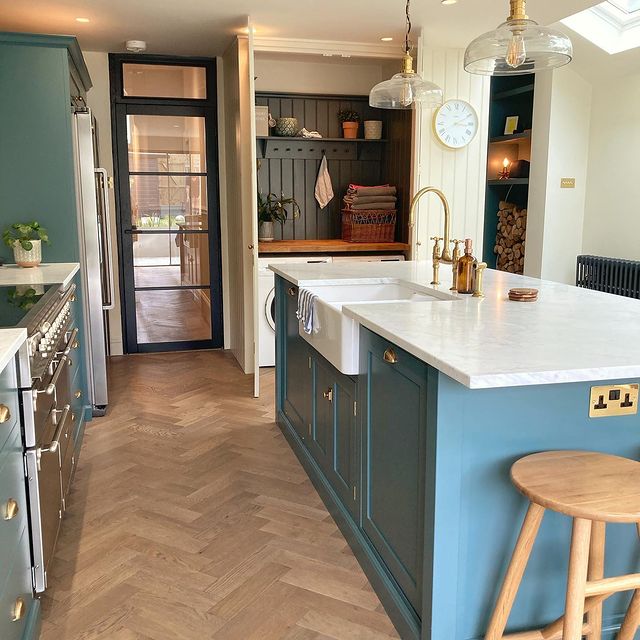
Leave a clear landing surface beside or above the washing machine for sorting and folding. A hard-wearing worktop across side-by-side appliances is one of the most useful additions, but it must allow the machines to be removed for repair and must not obstruct ventilation.
Indoor drying needs both physical space and moisture control. A ceiling pulley, wall-mounted rack or folding airer can work when it does not block circulation. Water evaporating from laundry remains inside the home until ventilation or a dehumidifier removes it, so watch for condensation and musty smells. Where garden space allows, one of the best rotary washing lines provides a simple outdoor alternative.
For detailed product comparisons, see our best heated clothes airers and best dehumidifiers for drying laundry. These guides explain capacity, room temperature, airflow and storage without adding direct product links to this editorial article.
If ironing happens in the utility room, include a socket in a sensible position and a dry place to store the board and cooled appliance. Our best ironing boards and best steam generator irons cover board size, stability, generator supports and scale management. For quick garment touch-ups, compare the best clothes steamers too.
Sinks, flooring and ventilation
Is a utility sink worth including?
A deep sink is useful for soaking clothes, cleaning muddy shoes, filling buckets and washing items you would rather keep away from the kitchen. Choose a durable surface and leave elbow room around the tap. If the room is very small, uninterrupted folding space may be more valuable than a second sink.
Choose a floor that tolerates everyday spills
Porcelain tiles, suitable luxury vinyl and other water-resistant finishes are common choices. Check slip resistance, subfloor preparation and compatibility with underfloor heating where relevant. Continue the finished floor beneath removable appliances where possible so replacement does not expose an unfinished recess.
Deal with heat and moisture
A utility room containing wet laundry and appliances needs a ventilation strategy. An opening window can help, but it is not always sufficient or convenient. Existing extract systems, background ventilation and any new mechanical extraction should be assessed as part of the home rather than improvised after condensation appears.

Utility cupboards, boot rooms and pet-friendly spaces
Where a separate room is impossible, a tall utility cupboard can house stacked appliances and shelves. Confirm ventilation, door clearances, leak access and acoustic separation before enclosing machines. Pocket or bifold doors save swing space but must still leave appliances accessible for maintenance.
A utility room beside a garden entrance can double as a boot room. Include a durable bench, hooks at different heights, washable flooring and ventilated shoe storage. Keep the route from the outside door to the sink clear so mud does not travel through the whole room.
Pet-washing areas need more than an attractive tiled enclosure. Plan a safe step-in height, non-slip base, controllable shower head, drainage and somewhere for towels. Check that splashes cannot reach sockets, cabinetry edges or stored chemicals.


Common utility room planning mistakes
- Ignoring door swings: test room, cupboard and appliance doors together before fixing the layout.
- Too little worktop: preserve at least one clear surface for laundry rather than filling every section with a sink or tall unit.
- No drying plan: decide where wet clothes will hang and how moisture will leave the room.
- Inaccessible services: valves, filters, traps and sockets must remain reachable for maintenance.
- Poor lighting: combine general light with clear illumination above the sink and worktop.
- Overfitted appliance gaps: allow realistic tolerances and future replacement rather than designing around one exact machine.
How much does a utility room cost?
Cost varies widely because a cupboard conversion and a new room with drainage, electrics, cabinetry and ventilation are fundamentally different projects. The position of existing water and waste connections often matters more than floor area. Bespoke cabinetry, stone worktops and structural changes increase the budget quickly.
Price the room in layers: building work and services first, then cabinetry and surfaces, then appliances and accessories. Keep a contingency for pipework, damaged subfloors and electrical upgrades that only become clear once work begins. Use our renovation cost calculator to frame the wider project budget.
Design details that make a utility room easier to use
Worktop height and appliance access
A continuous worktop above front-loading appliances gives you somewhere to empty a basket, treat stains and fold clean clothes. Standard kitchen worktop height is a useful starting point, but appliance dimensions, floor build-up and the needs of the household should determine the finished level. Make sure the machine can slide out without dismantling half the room.
A removable section or carefully planned support may be needed where valves and services sit behind the appliances. Keep the underside protected from moisture and follow the appliance clearances. If one household member will do most of the laundry, test the reach to wall cupboards and the comfort of the folding position rather than copying a showroom layout.
Lighting for practical tasks
One central pendant often leaves shadows beneath wall units. Combine even general light with task lighting over the sink, worktop and any clothes-care area. Choose fittings appropriate to the location and ask an electrician to plan switching, sockets and fixed equipment together.
Natural light is welcome, but a window above the worktop can remove valuable wall storage. A high-level or narrow window may preserve cupboard space while improving daylight and ventilation. Use blinds or finishes that tolerate humidity and are easy to clean.
How to design a narrow utility room
Keep tall units together at one end so the room does not feel like a corridor between two towers. A single run of base units with shallow storage opposite is often more comfortable than squeezing in two full-depth runs. Sliding or outward-opening doors can release internal floor space, provided they do not create a problem in the adjoining room.
Choose handles that will not catch clothing as people pass, and avoid open shelves at head height in the narrowest section. Light colours can make the room feel calmer, but practical contrast is useful around handles, switches and changes in floor level.
If the passage is also the route to a garden, protect the laundry zone from muddy traffic. A bench or shoe tray should sit close to the entrance, while clean folding and ironing surfaces belong farther inside. This simple zoning prevents every household job competing for the same patch of worktop.
Where to put sockets, plumbing and services
Decide the appliance models late enough that the layout stays flexible, but early enough that services land in accessible positions. Avoid trapping sockets, isolation valves and waste connections directly behind machines where they prevent the appliance sitting back or cannot be reached in an emergency.
A sink waste, washing-machine waste and condensate drain need properly designed routes and traps. Long improvised hoses hidden behind cabinetry are difficult to inspect. If the utility is formed in a garage, outbuilding or new extension, consider pipe insulation and low-temperature risk as part of the building design.
Leave clear access to boilers, cylinders, meters and consumer units. Required working clearances and ventilation take priority over an extra shelf. A fitted cupboard can conceal services visually, but it must not interfere with inspection, maintenance or safe operation.
Finishes that survive a working room
Utility rooms take more knocks and splashes than their polished photographs suggest. Use wipeable paint, sealed edges and a splashback behind the sink. Cabinet plinths and end panels near appliance doors need particular protection from wet baskets and small leaks.
Choose handles, taps and hardware for ease of cleaning as well as style. A pale room does not need to be clinical: timber details, baskets and a muted cabinet colour can add warmth without filling the worktop with decoration. Keep the surfaces needed for laundry deliberately uncluttered.
Noise is another finish decision. Solid doors, careful appliance levelling and anti-vibration measures approved by the manufacturer can help, but enclosing machines without ventilation is not a solution. Address rattling panels and unbalanced loads at source.
Utility room planning checklist
- List the jobs the room must handle and the equipment each one needs.
- Measure the room, doors, services and appliance openings.
- Choose a layout with comfortable circulation and maintenance access.
- Plan wet laundry, extraction and drying before choosing cabinetry.
- Allocate closed, open and tall storage by task.
- Select durable floors, worktops and splash-resistant finishes.
- Confirm plumbing, electrical and ventilation work with appropriate professionals.
- Test the complete layout before ordering fitted units.
Frequently asked questions
What should every utility room include?
Most need laundry appliances, a clear work surface, safe product storage and a drying or moisture-management plan. A sink and tall cleaning cupboard are useful when space and services allow.
Can you create a utility room in a small space?
Yes. A narrow single-wall layout, stacked compatible appliances or a ventilated utility cupboard can work if doors, services and maintenance access are planned carefully.
Does a utility room need a window?
Not necessarily, but it needs suitable lighting and ventilation. The correct approach depends on the room, appliances and wider ventilation strategy.
Can a tumble dryer sit above a washing machine?
Only when the appliances are compatible and installed with the manufacturer-approved stacking kit and instructions.
What flooring is best for a utility room?
Choose a durable, water-resistant and suitably slip-resistant finish. Porcelain tile and appropriate resilient flooring are common options when correctly installed.
Do you need planning permission for a utility room?
Internal alterations often do not require planning permission, but extensions and some changes to listed buildings or protected properties may. Building Regulations can still apply, so check the specific project.


 Sign up with Facebook
 Sign up with Google
