
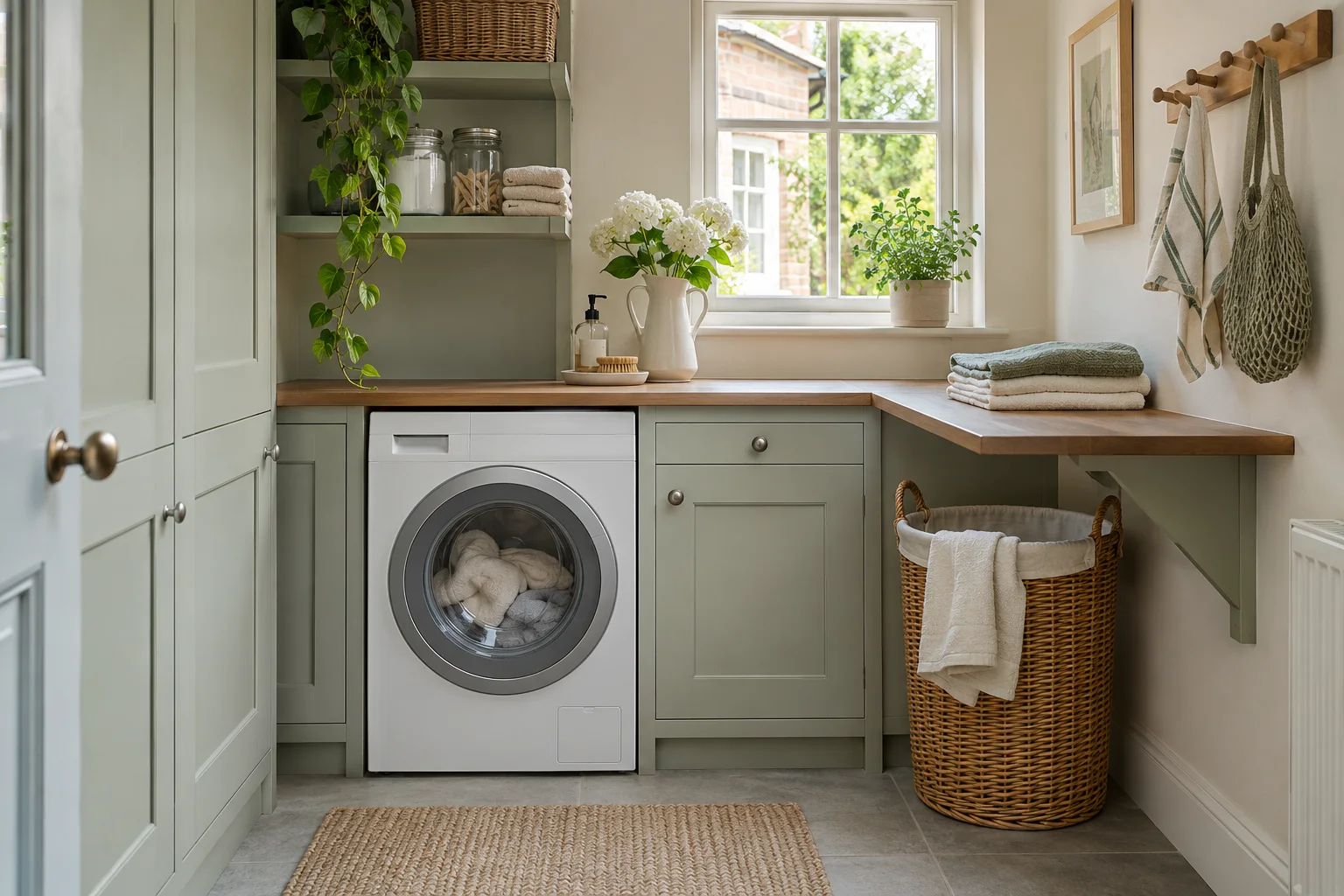
A washing machine can look right on paper and still be wrong for the space or the laundry you actually do. A big drum is useful for bulky loads, but it is not a reason to pay more if most weeks you wash a few smaller loads.
This guide helps you choose which features are worth paying for: capacity, dimensions, energy use, spin, noise and the programmes you will really use. If you want specific models, see our best washing machines guide.
Measure more than the gap under the worktop
Check the model’s height, width and depth against your space, including the door, controls, hoses and any clearance required in its installation instructions. Some makers publish both cabinet depth and full depth. A slim-looking cabinet does not mean the closed door will sit flush with your units. Measure the route through doorways and around corners too.
Freestanding and integrated machines are not interchangeable. An integrated model needs the right cabinet, door fixing and plinth arrangement. If depth is your constraint, our slim-depth washing machine comparison checks exact model measurements; still confirm installation clearance before ordering.
Choose a drum for the loads you actually wash
The kilogram figure is the maximum dry-laundry load for a specified programme, not a target for every wash. An 8kg machine can be a practical middle ground, while a larger drum may make sense for regular family bedding or towels. If you wash little and often, a smaller machine may suit you better and take less space.
Check the programme table: a quick, wool or delicate cycle may accept much less than the headline capacity. Bedding also needs enough room to tumble, so an extra kilogram on the badge does not guarantee a duvet will wash well. For detailed model choices, start with the capacity and footprint together rather than treating either in isolation.
Read the energy label alongside your routine
On a current UK energy label, look at the efficiency class, energy use in kWh per 100 Eco 40–60 cycles, water use per cycle, programme duration and spin noise. The figures give a standard basis for comparison, but a different programme or temperature will change actual use. GOV.UK explains the data used on washing-machine energy labels and the importance of choosing a machine that suits your needs.
To compare electricity cost, divide the label’s kWh per 100 cycles by 100, then multiply by your own electricity price per kWh. Add water and detergent costs separately if they matter to your budget. Do not assume a higher purchase price will automatically pay for itself through energy savings.
Decide how much spin and quietness matter
A 1400rpm maximum can help remove water from suitable laundry, useful if you line-dry indoors or use a tumble dryer. It is not the spin speed on every cycle; delicate programmes may limit it. Compare the spin-drying class and noise figure on the label as well as the headline rpm.
If the machine sits near a bedroom or open-plan living area, look at the labelled spin noise, vibration control and whether its feet can be levelled on your floor. A quiet wash cycle will not make a noisy final spin disappear. Avoid promising silence from a motor type alone.
Pay for cycles you will use
A quick wash is handy for lightly worn clothes, but check its load limit and duration at a realistic temperature. An allergy or hygiene cycle may help with particular laundry, provided you follow garment labels and the machine manual. Steam, app control and automatic dosing can be useful conveniences; they are not essential for everyone.
Think about the chores around the machine too: access to the detergent drawer and filter, a clear display, delay-start if it helps your schedule, and available installation and old-machine removal. Confirm what the delivery service actually includes before relying on it.
Which features are worth paying for?
| Your main concern | Prioritise | Less useful on its own |
|---|---|---|
| A tight utility space | Full closed-door depth, hose clearance and access route | A “slim” label without dimensions |
| Regular family loads | Useful capacity on your everyday programmes | The largest drum regardless of space |
| Keeping bills down | Energy-label kWh, water and your usual cycles | Energy class without actual usage |
| Laundry drying slowly | Spin-drying performance and fabric-appropriate speed | Maximum rpm alone |
| Open-plan living | Labelled spin noise and sound installation | A generic “quiet motor” promise |
On a phone, swipe the table sideways to see all three columns.
Once you know your two or three priorities, our six practical washing-machine picks give you exact models to compare. Check current stock, delivery arrangements and the installation drawing before buying.
How we put this guide together
We compared the practical decisions that change the fit and usefulness of a washing machine, using manufacturer specifications and the information on energy labels. This is buying advice, not a claim of hands-on testing.
Frequently asked questions
What washing machine capacity do I need?
Choose for the laundry you normally wash, not just the largest load on offer. An 8kg model can suit many households, but bulky bedding and family loads may call for more. Compare your usual loads with the model’s programme limits; not every cycle accepts the full rated capacity.
Is a 1400rpm washing machine worth paying more for?
A faster maximum spin can leave some loads drier, but the result depends on the programme and fabric. Compare spin-drying and noise information on the energy label, and check whether the cycles you use allow that speed.
Does an A-rated washing machine always cost less to run?
The energy label helps compare the standard Eco 40–60 programme, including kWh per 100 cycles. Your bill also depends on your tariff and the programmes and temperatures you actually use.
How much space should I leave behind a washing machine?
Follow the exact model’s installation instructions for hoses, ventilation and clearance. Measure the space and access route, and distinguish cabinet depth from closed-door depth before ordering.