
After a spill or a dusty DIY tidy-up, it’s tempting to put the wet and dry vacuum straight back in the cupboard. A few minutes of cleaning and drying can prevent a musty tank, a blocked hose and a filter that struggles next time. The right routine depends on what you’ve collected and on your machine’s instructions.
Start with what went into the tank
Switch off and unplug a corded vacuum before opening it; remove the battery from a cordless model if its instructions tell you to. Empty ordinary dry debris before it packs around the inlet. A collection bag can make this less messy, but don’t shake a bag of fine or potentially hazardous dust into the room. If the job involved construction dust, follow the controls for that material rather than treating a general-purpose vacuum as a classified extractor. The HSE’s on-tool extraction guidance explains why the right extraction unit matters.
Brush or wipe loose debris from the tank and check that nothing is caught where the hose joins it. If you use a bag, inspect it for fullness and damage and fit the replacement specified for the exact machine.
After wet pickup, empty and dry it
Empty collected liquid promptly, with the machine switched off and disconnected from power. Check the model’s safe liquid-fill limit rather than assuming the whole quoted tank capacity is usable. Nilfisk advises unplugging before emptying or maintenance and allowing a wet filter to dry before dry pickup. Wipe or rinse the tank and suitable detachable accessories as the manual permits, then let them dry before reassembly or storage.
Remove any dry collection bag before wet use and restore the correct bag and filter setup when the machine is dry again. This changeover is model-specific: Kärcher says its WD cartridge and flat-pleated filters can remain in place for wet pickup, but the bag should be removed. Other machines may require a different wet filter. Follow the exact instructions rather than copying the setup of another vacuum.
Look after the filter without damaging it
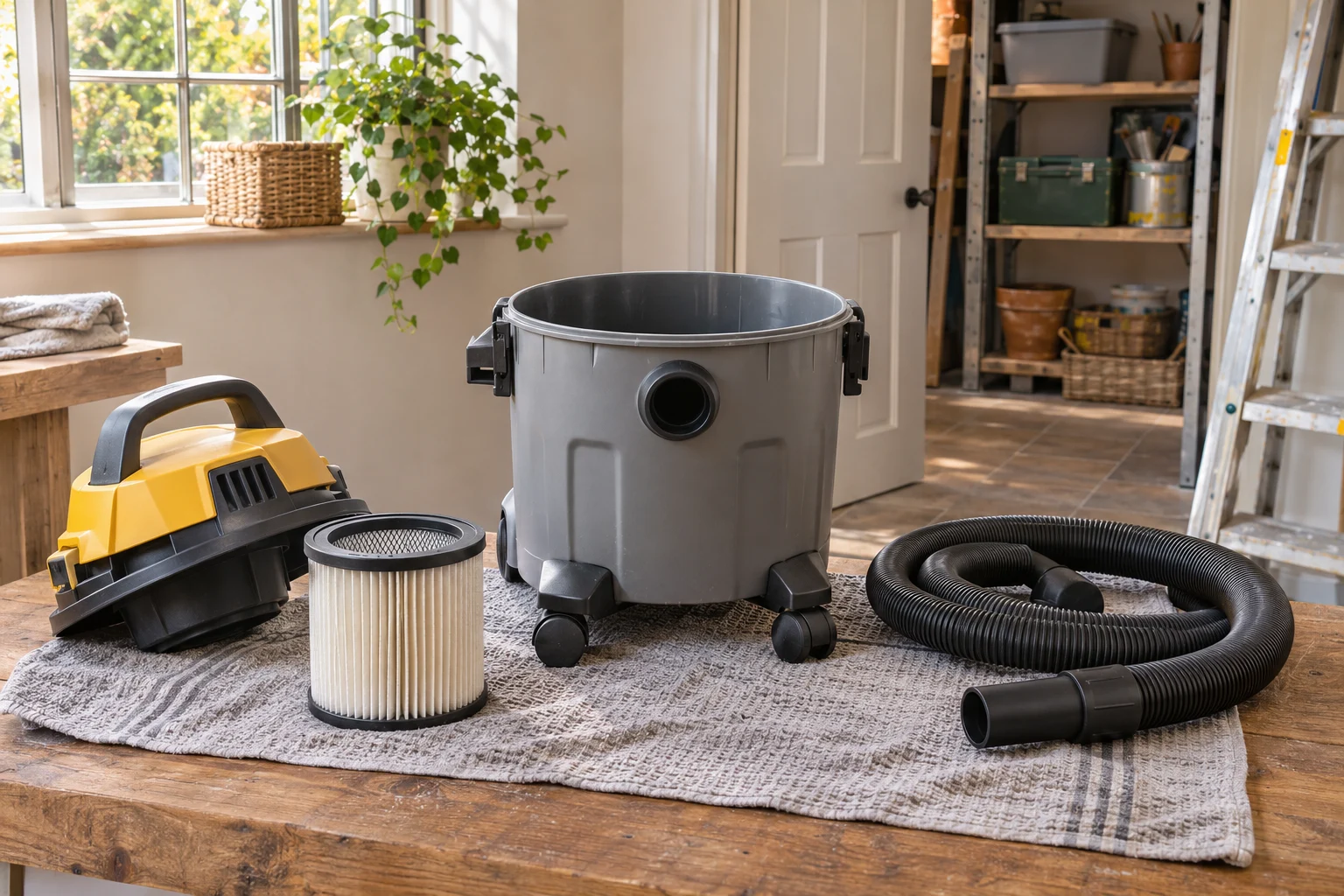
A clogged or still-wet filter can cut suction. First check the manual: some filters may be rinsed, some have a built-in cleaning function, and others need replacing. Kärcher says its washable WD foam and cartridge filters should dry fully before reuse; it also distinguishes the filter-cleaning function on WD 5 and WD 6 models. Don’t scrub a pleated filter, put it back damp for a dry job, or assume a lookalike replacement is compatible.
Inspect the seal and filter housing while they’re accessible. If a filter is torn, misshapen or no longer restores performance after the permitted cleaning, replace it with the correct part. A new filter does not turn an ordinary wet and dry vacuum into an M- or H-class dust extractor.
Store it ready for next time
Once the tank, hose and washable parts are dry, reconnect the parts and park the hose and tools where they won’t be crushed. Keep the machine in a dry place with the cable loosely coiled; don’t carry it by the cable. Leave any removable battery in the condition and location recommended by its manufacturer. Nilfisk’s maintenance advice also recommends emptying the tank after liquid pickup to limit odours and mould.
Keeping the floor head, crevice tool, bags and filter together saves a hunt before the next job. If something is missing, check the model number before ordering: our buying guide covers the accessories worth checking on a machine.
If suction has dropped, check the simple causes first
Turn the vacuum off before troubleshooting. Check whether the tank or bag is full, then look for a blockage in the floor head, hose and inlet. Check that the filter is the correct one, seated properly and clean and dry for the task. On a wet job, a float may shut off airflow when the safe fill level is reached; switch off and empty the tank. If those checks don’t restore normal operation, consult the manual or manufacturer rather than continuing with an overheating or damaged machine.
Frequently asked questions
Should I empty a wet and dry vacuum after collecting water?
Yes. Switch it off, disconnect it from power and empty the liquid promptly. Clean and dry the tank and suitable parts as your model’s instructions require before storage.
Can I use a wet filter for dry debris straight away?
Wait until a washable filter is fully dry, or fit the correct dry filter if the manual specifies a change. A damp filter can clog quickly when it meets dry debris.
Can I wash every wet and dry vacuum filter?
No. Cleaning methods vary by filter and model. Check the manual before rinsing; replace a damaged filter with the specified part.
Why has my vacuum lost suction?
A full tank or bag, blocked hose or nozzle, dirty filter, poor filter fit or a wet-pickup float can all restrict airflow. Switch off before checking them and follow the manual if suction does not return.