
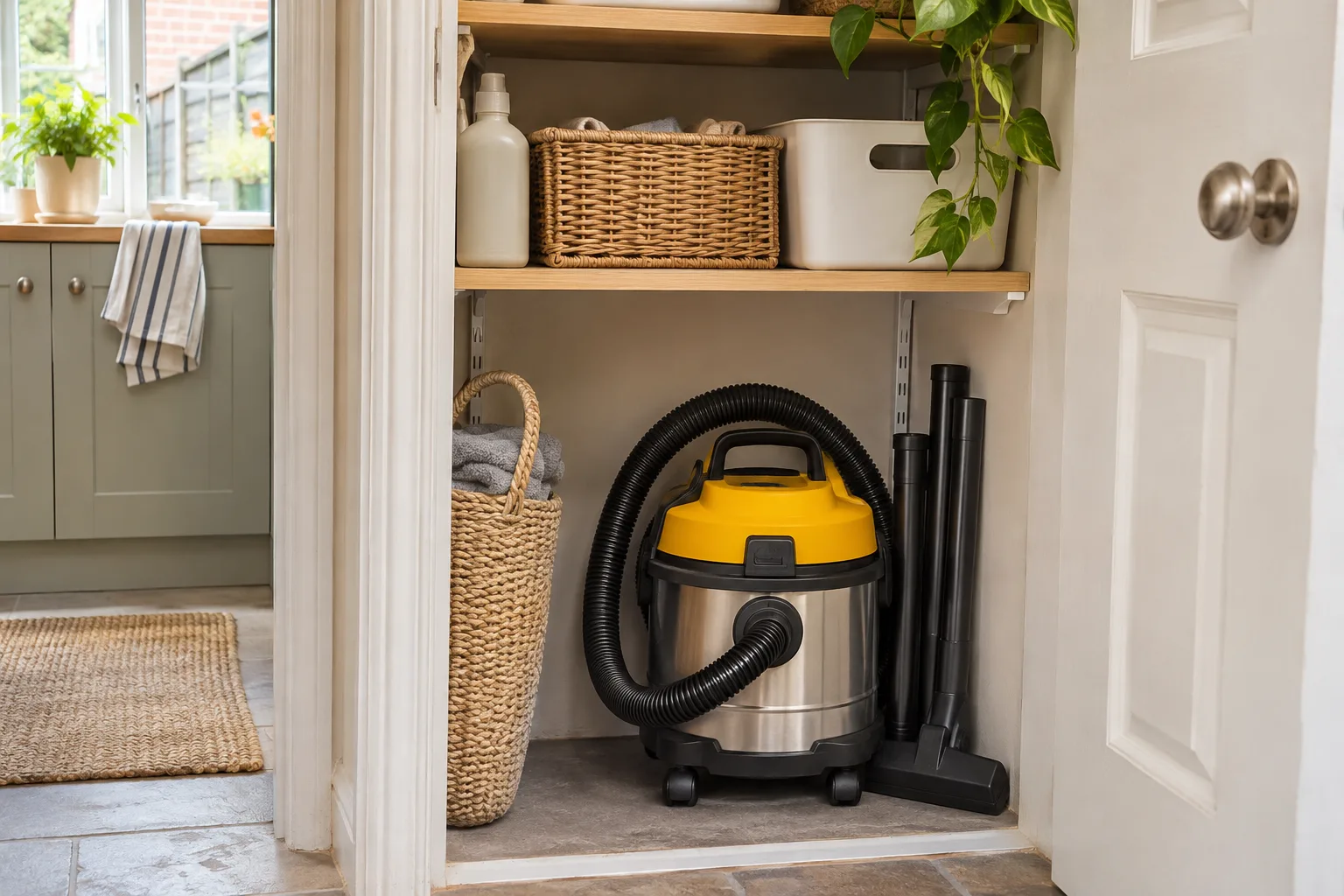
A wet and dry vacuum is handy after a small DIY job, but a large drum can be awkward to keep around between projects. These compact models make more sense when you need to carry the vacuum upstairs, clean the car or tuck it into a cupboard. We’ve compared six options, focusing on tank size, storage and what each includes.
Compact does not mean suitable for every renovation dust. These are choices for ordinary permitted debris and spills; fine or hazardous construction dust may need a correctly selected classified extractor.
Our top 6 compact picks
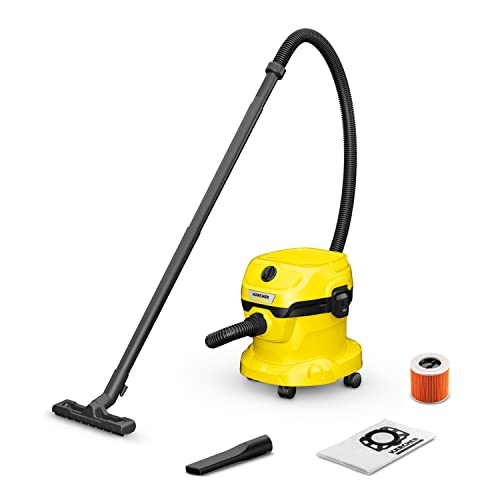
12L tank · Cartridge filter for wet and dry pickup

15L tank · On-board tool storage

15L tank · 3kg body and 15L steel tank

16L tank · 16L tank and blower connection

11L tank · 18V ONE+ battery platform

12L tank · Wet/dry nozzle and accessory holder
Compare the compact vacuums
| Vacuum | Tank | Practical strength | Main compromise |
|---|---|---|---|
| Kärcher WD 2 Plus 12L | 12L | Cartridge filter for wet and dry pickup | Its 4m cable and 12L tank limit reach and capacity. |
| Bosch PAS15-200 | 15L | On-board tool storage | There is no power-tool take-off socket. |
| Einhell TC-VC 1540 S | 15L | 3kg body and 15L steel tank | The short hose and cable mean more repositioning. |
| Scheppach NTS16 | 16L | 16L tank and blower connection | Its 16L body takes more storage space than the 10–12L choices. |
| Ryobi RV1811-0 | 11L | 18V ONE+ battery platform | Battery and charger cost extra if you do not already own them. |
| Nilfisk Buddy II 12 | 12L | Wet/dry nozzle and accessory holder | The small tank needs more frequent emptying. |
On a phone, swipe across the table to see every column. Tank volume is not necessarily usable liquid capacity.
Best small corded all-rounder
1. Kärcher WD 2 Plus 12L
The WD 2 Plus is the smallest tank in Kärcher’s home range. Its cartridge filter can stay in place when you switch between permitted dry debris and a spill, though the dry collection bag should be removed for liquids. The hose and floor tool park on the body, which helps when storage is tight.
Choose it if
You want a small corded machine for ordinary household and garage clean-ups.
Skip it if
You need a long cable or a power-tool socket.
Main compromise: Its 4m cable and 12L tank limit reach and capacity.
Best for tidy accessory storage
2. Bosch PAS15-200
Bosch gives the PAS15-200 a place to keep its floor and crevice tools, so the accessories are less likely to disappear between jobs. Its 15-litre tank is still manageable for a cupboard, and Bosch says one filter system handles both permitted wet and dry use. Check the manual before changing from a dry bag to liquid pickup.
Choose it if
You want a compact tank with tools kept together.
Skip it if
You need automatic switching with a power tool.
Main compromise: There is no power-tool take-off socket.
Best lightweight steel tank
3. Einhell TC-VC 1540 S
Einhell specifies a 3kg product weight for this 15-litre model, so carrying the empty machine between rooms should be easier than with the larger vacuums in our broad roundup. It includes a foam filter for wet pickup and bags for dry use. Its hose is 1.5m and cable 2.5m, so keep a safe socket position in mind.
Choose it if
You want a compact steel tank that is easy to carry when empty.
Skip it if
You need a long reach without moving the plug.
Main compromise: The short hose and cable mean more repositioning.
Best larger compact tank
4. Scheppach NTS16
The NTS16 gives a little more capacity than the 10–12-litre picks without moving into the bulky 20–30-litre group. Its supplied hose, floor nozzle and crevice tool cover routine tidy-ups, while the blower connection offers another way to move loose, non-hazardous debris. Check where the full body will stand before choosing it for a narrow cupboard.
Choose it if
You want a modest capacity increase while staying below 20 litres.
Skip it if
You want the smallest footprint in this selection.
Main compromise: Its 16L body takes more storage space than the 10–12L choices.
Best cordless compact choice
5. Ryobi RV1811-0
Ryobi’s 11-litre project vacuum is useful where a trailing cable would get in the way, such as moving between the car and a garden shed. It has a top handle and on-board places for the hose and nozzles. This exact RV1811-0 is a bare tool: the battery and charger are not included, so it makes most sense if you already use Ryobi ONE+ batteries.
Choose it if
You already own compatible batteries and want cordless portability.
Skip it if
You need uninterrupted running time or a complete kit out of the box.
Main compromise: Battery and charger cost extra if you do not already own them.
Best simple carry-and-store option
6. Nilfisk Buddy II 12
The Buddy II 12 also appears in our broader roundup, but it earns a place here for its genuinely small 12-litre tank and straightforward wet/dry nozzle. Nilfisk supplies a wet filter and dust bag with this model, and the accessories have a place on the body. It is a good fit for shorter clean-up sessions where carrying and storing the machine matter more than capacity.
Choose it if
You want a compact familiar setup for small routine jobs.
Skip it if
You want a power-tool socket or fewer emptying stops.
Main compromise: The small tank needs more frequent emptying.
What compact really means at home
Our six picks have 11–16-litre tanks, including options smaller than the 20–30-litre models in the broader wet and dry vacuum roundup. Check the full height and width, where the hose parks and how far the cable reaches. A short cable can be more frustrating than a slightly larger tank if you have few sockets. A cordless model avoids that cable but brings battery cost and runtime into the decision.
Compare the attachments supplied with the exact model. A floor head helps with larger areas, while a crevice nozzle is useful around car seats or behind a bench. For wet pickup, follow the manual’s bag and filter setup; the nominal tank volume may exceed the safe liquid fill amount. Our buying guide explains these checks in more detail.
Compact vacuums and renovation dust
A small wet and dry vacuum can handle ordinary debris only when its instructions permit it. It should not be treated as a safe extractor for dust made by cutting or sanding just because it has a filter or a tool adaptor. The HSE guidance on construction dust calls for appropriately selected M- or H-class on-tool extraction for many tasks. Identify the material and the required control before starting work. If asbestos may be present, stop and seek specialist advice.
How we chose these vacuums
We compared six exact offers with tanks no larger than 16 litres, looking at storage, carry features, supplied accessories, wet/dry setup and practical drawbacks. Product details come from manufacturer information and the checked exact offers; we have not hands-on tested them.
Frequently asked questions
Is a 12-litre wet and dry vacuum large enough for home DIY?
It can be a practical size for short, ordinary clean-ups, but you will empty it more often than a 20–30-litre machine. Check the usable liquid capacity separately.
Do compact wet and dry vacuums need bags?
It depends on the exact model and job. Many use a bag for dry waste and require it to be removed for liquid pickup. Follow the supplied manual and use the correct filter.
Can these compact vacuums collect plaster or masonry dust?
Do not assume so. The machine and complete extraction setup must suit the exact material and task. General-purpose wet and dry vacuums are not substitutes for appropriately classified extraction where it is required.
Does the Ryobi pick include a battery?
No. The exact RV1811-0 is a bare tool; the battery and charger are sold separately. It makes most sense if you already have compatible Ryobi ONE+ batteries.
As an Amazon Associate I earn from qualifying purchases.