

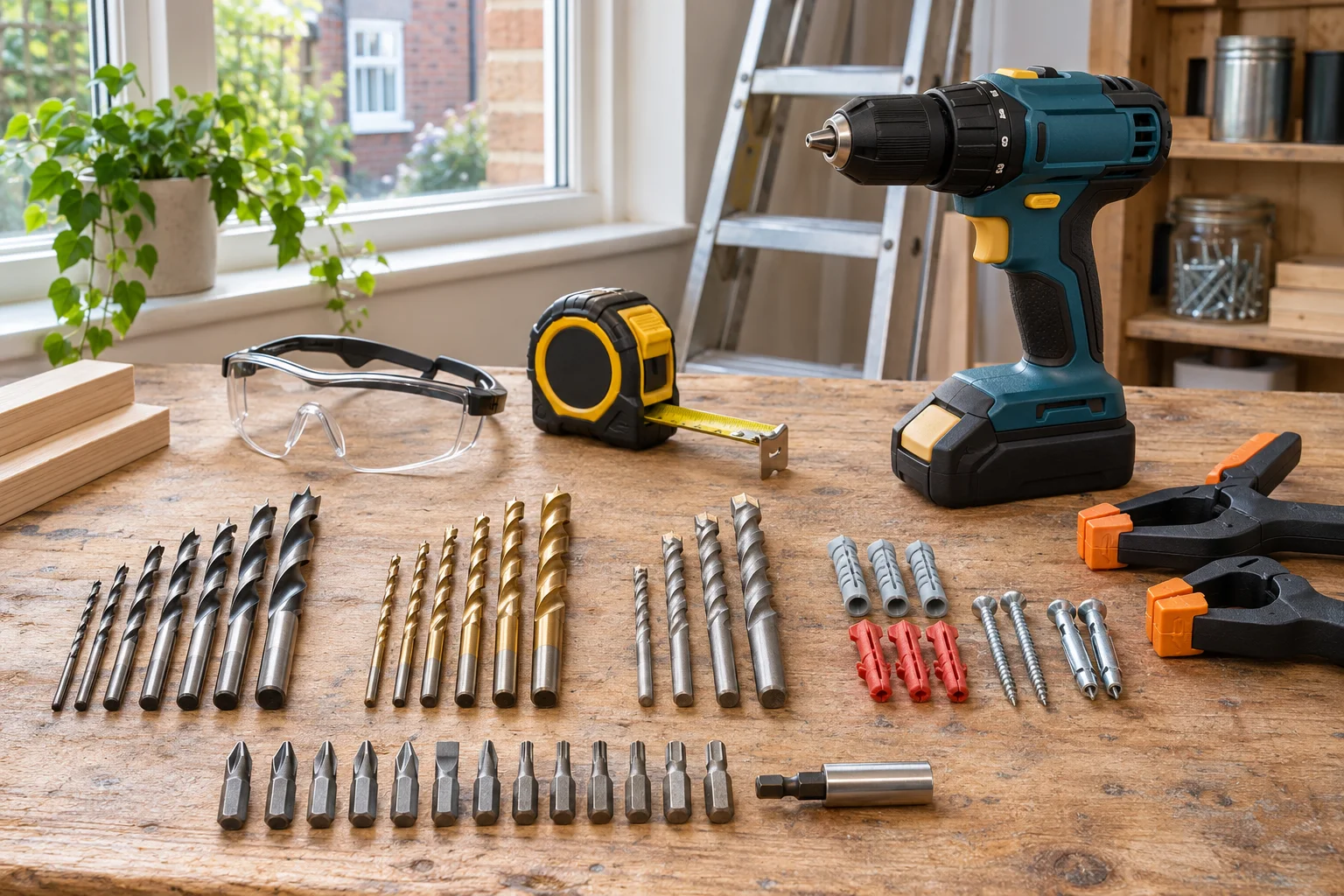
Once you’ve chosen a cordless drill, a few well-chosen accessories will help you get started on jobs around the home. From drill bits for wood and masonry to screwdriver bits and suitable wall plugs, we’ll explain what’s worth having to hand and what you can wait to buy until a project calls for it.
Match the drill bit to the material
| Material | Useful bit | Before you drill |
|---|---|---|
| Timber and sheet wood | Wood twist bit with a centring point. | Support the workpiece and avoid drilling into the surface beneath it. |
| Metal | Sharp high-speed steel (HSS) metal bit. | Secure the piece; use the speed and cooling method the bit maker recommends. |
| Ordinary brick | Suitable masonry bit with a combi drill's hammer mode if needed. | Check for services and match the hole to the fixing. |
| Tile | A bit made for the tile material; hard porcelain may need a suitable diamond bit. | Use the bit maker's method; don't start with hammer mode on the tile. |
On a phone, swipe the table sideways to see every column.
Bosch's guide to drill bits explains the difference between wood, metal and masonry bits. Tile needs its own check: Bosch's tile-drilling guidance distinguishes softer tiles from hard porcelain. Don't assume one “universal” bit gives a clean hole in every surface.
Choose screwdriver bits that fit
A small selection of Phillips, Pozidriv and Torx bits covers many household screws, but they aren't interchangeable. A bit that slips can damage the screw head and make a simple job awkward. Check the screw type and size, seat the bit fully and use the drill's clutch and a gentle speed. A magnetic bit holder can make shorter bits easier to use, especially when putting up hinges or brackets.
Buy fixings for the wall, not the drill
Solid brick, hollow block, plasterboard and tile over a backing wall don't hold a fixing in the same way. Identify what the load will actually be carried by, then follow the fixing manufacturer's instructions for the hole size, screw and permitted load. For a heavy cupboard or TV bracket, don't guess from a generic wall-plug assortment. Fischer describes cavity fixings for hollow walls; its dot-and-dab guidance shows why a plasterboard face over masonry needs a different approach.
If the wall construction or load path is unclear, get competent advice before hanging something heavy. The drill makes the hole; the right fixing keeps the item in place.
Keep a few measuring and safety basics nearby
- Safety glasses: protect your eyes from dust and chips.
- Tape measure, pencil and level: mark the right position before you make a hole.
- Clamps: hold loose timber or metal securely instead of gripping it near the bit.
- Suitable cable and pipe detector: help check what may be hidden in a wall. A clear reading isn't a guarantee.
- Dust control: use a method suitable for the material and the work area; keep dust out of your breathing zone.
Electrical Safety First warns about hidden cables when drilling walls. Its drill safety guidance also covers eye protection, securing loose material and letting hot bits cool before handling them. If you're unsure what's behind a wall, stop rather than relying on a detector alone.
Check what your drill kit already includes
Some kits include a starter set of bits, but a large piece count doesn't mean you'll have the right sizes for your project. Lay out what you have before buying more. Choose a few good bits for the work ahead and replace worn ones rather than forcing a blunt bit. If you're still choosing the tool itself, our cordless drill buying guide covers the kit contents and controls; our six-kit comparison shows how the supplied accessories differ.
What will you need to replace?
Screws and wall fixings are used up as projects go along, so buy the sizes specified for each job. Drill and screwdriver bits aren't single-use, but they do wear: replace one that has become blunt, chipped or unable to grip a screw cleanly. Keep spare bits for sizes you use often rather than buying a huge mixed set just for the piece count.
How we put this guide together
We grouped accessories by the decisions that matter on a home job: material, screw head, wall construction and safe preparation. The bit and fixing guidance comes from the manufacturers linked above, with electrical safety advice from Electrical Safety First. This is a practical starter guide, not a hands-on test or a claim that one accessory set suits every wall.
Frequently asked questions
Do I need a different drill bit for wood, metal and brick?
Yes, choose a bit suited to the material. Wood bits help you start accurately, HSS bits cut metal, and masonry bits are made for suitable brick or stone. Check the drill mode and the bit maker's instructions too.
Can I use a masonry bit on tiles?
Don't assume it will make a clean hole. Tile types differ, and hard porcelain may need a suitable diamond bit. Choose the bit and method for the exact tile, without starting in hammer mode.
Which wall plugs should I keep at home?
Keep fixings for walls you know you have, and choose the exact plug and screw for the load and material each time. Solid masonry and hollow plasterboard need different approaches.
Are the bits in a cordless drill kit enough?
They may cover basic work, but check the sizes, quality and materials they're intended for. Add the specific bits and fixings your next project requires rather than relying on the number of pieces in the case.
A small, useful starter set
Start with a few material-appropriate bits, matching screwdriver bits and fixings chosen for the job. Add measuring tools, eye protection and a sensible wall check. You can build the kit as projects come along.


 Sign up with Facebook
 Sign up with Google
