
A musty smell on clean clothes or a drawer that will not rinse properly is often a sign that the machine itself needs attention. You do not need to take it apart for a useful clean: start with the places that collect detergent, lint and moisture.
Here is a practical routine for a front-loading washing machine, from the drawer and door seal to the drum and accessible filter. The controls and cleaning products vary by model, so keep its manual to hand. If you are choosing a replacement rather than maintaining the one you have, see our washing machine buying guide.
The quick cleaning routine
- Empty the drum and switch the machine off before cleaning accessible parts.
- Remove and rinse the detergent drawer if your manual permits it; wipe its recess.
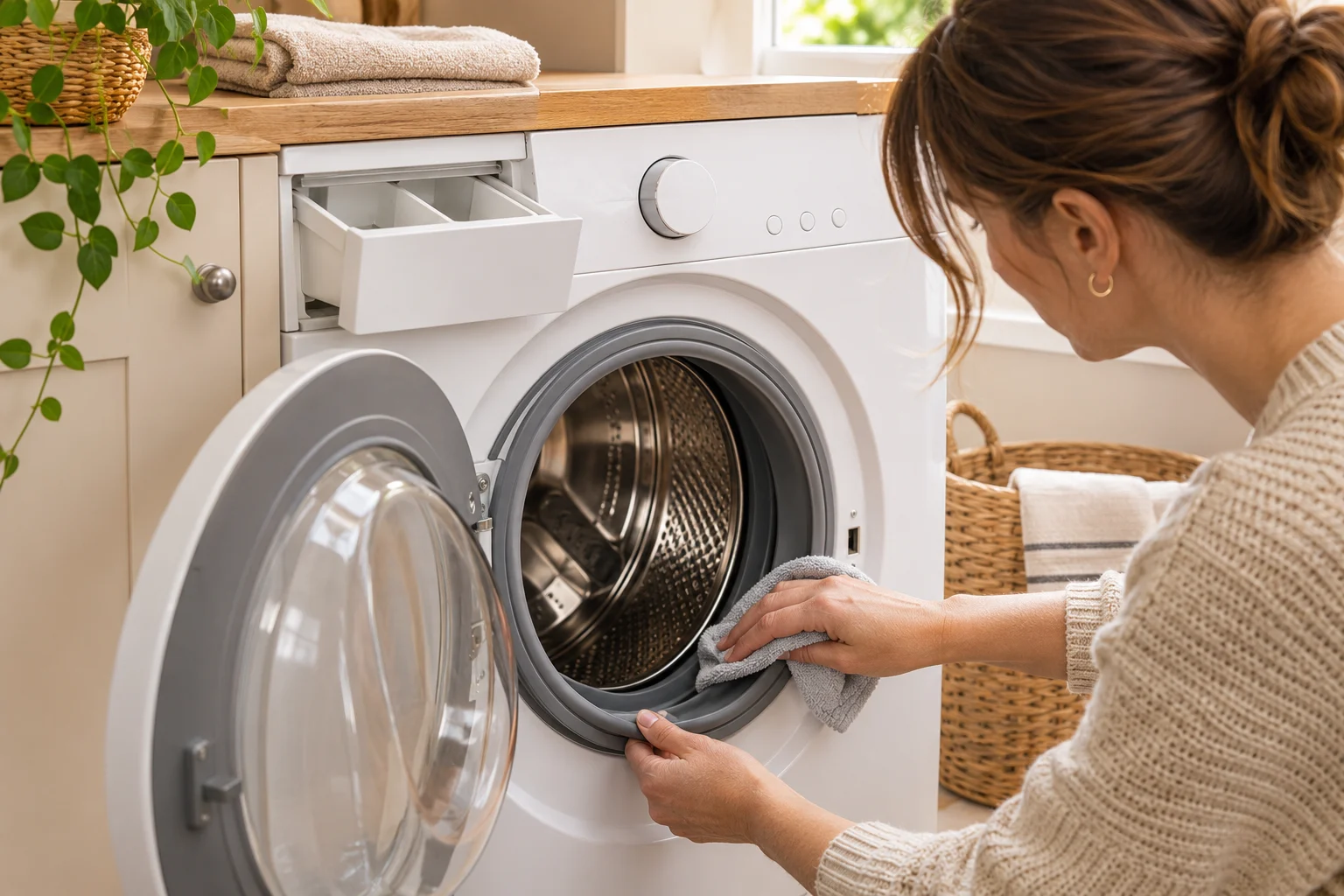
- Wipe the door glass and folds of the rubber seal, checking for trapped lint or small objects.
- Run the machine’s empty drum-clean programme as its manual directs.
- Drain and clean the accessible pump filter using your model’s instructions.
- Dry and refit everything securely, then leave the door and drawer ajar long enough for moisture to escape.
These are separate jobs, not a recipe for pouring a household cleaner into every part. Use only products and quantities allowed by the manual; never mix cleaning chemicals.
Clean the drawer and door seal
Detergent and conditioner can cling to the drawer and the space behind it. With the machine off, remove the drawer using its release catch if there is one. Rinse removable pieces under warm water, use a soft brush or cloth on stubborn residue, wipe the recess and let the parts dry before refitting. Bosch’s drawer-care instructions show how to lift out the drawer and remove residue with a small brush.
Open the door and gently pull back each fold of the rubber seal. Remove any lint or trapped items and wipe the seal with a damp, non-abrasive cloth, then dry it. Do not pull at or detach the seal. Samsung’s maintenance guidance recommends checking this area regularly. A torn seal or continuing leak needs repair, not a harder scrub.
Run the right empty drum-clean cycle
If your machine has Tub Clean, Drum Clean or Eco Drum Clean, run it with an empty drum at the interval in its manual or when its reminder appears. The product rule matters: Samsung says not to add ordinary detergent or common cleaning agents to its Eco Drum Clean programmes, and its Eco Drum Clean reminder can appear after 40 washes. Do not treat those instructions as interchangeable.
If there is no dedicated cycle, consult the exact manual for its recommended empty maintenance wash and permitted cleaner. A quick wash with clothes in it is not the same thing. Avoid improvised mixtures of vinegar, bleach and detergent: they may conflict with the machine’s instructions or damage parts.
Check the drain filter carefully
A slow drain, lint on laundry or a pump warning can point to the accessible debris filter. Locate its small access flap only if your model has one. Switch the machine off, let any hot water cool and put towels plus a shallow tray beneath the flap. If it has an emergency drain hose, empty that first into the tray; then turn the filter cap slowly. Water can still come out.
Remove debris, rinse the filter, check that its seating is clear, and refit the cap and any hose plug firmly according to the manual. Run a short rinse or drain check and look for leaks. Samsung’s illustrated filter steps show why the drain-hose sequence matters on its models. Some machines have a different arrangement or no user-serviceable pump filter; do not force a stuck cap or open a sealed panel.
Small habits that help prevent smells
Take wet clothes out promptly and leave the door and drawer slightly open after a wash when safe to do so around children and pets. Use the detergent dose for your water hardness and load rather than adding more in the hope of a cleaner wash. Check pockets for coins and tissues, and keep an eye on the seal for trapped objects.
If the machine still smells after the drawer, seal, drum programme and filter have been dealt with, check the manual’s troubleshooting section. A persistent drainage fault, leak, damaged seal or electrical issue calls for a qualified repairer. Cleaning is maintenance, not a fix for a failed component.
Frequently asked questions
How often should I clean a washing machine?
Wipe away visible residue after washes and follow your model’s reminder or manual for drum-clean frequency. Clean the drawer and check the filter regularly; the right interval depends on use and the model.
Can I put detergent in a drum-clean cycle?
Not unless your exact manual says to. For example, Samsung says not to add ordinary detergent to its Eco Drum Clean cycle. Other makers may allow a specific machine cleaner, so check your model instructions.
Why does my washing machine smell after cleaning?
Residue may remain in the door seal, drawer recess or drain filter, or damp laundry may have been left in the drum. Check those areas and the model’s cleaning instructions. If a strong smell persists or the machine will not drain, seek a repair assessment.
How do I clean the washing machine filter without flooding the floor?
Follow the exact manual. Turn the machine off, let hot water cool, place towels and a shallow container under the access flap, and use the emergency drain hose if fitted before unscrewing the filter. Do not force a stuck cap.