
If your washing machine sits in the kitchen, the choice is not only about how it looks. A cabinet door can keep the room visually calm, but it also changes the fit, access and replacement job. A freestanding machine is easier to see and reach, provided its full depth works with the units.
This guide compares integrated and freestanding washing machines for a real kitchen or utility room: what each needs to fit, what changes when you replace one and where the extra cost can arise. If you have already decided on a freestanding model, our washing machine buying guide covers capacity, energy use and programmes.
The practical difference
Integrated: concealed behind a furniture door
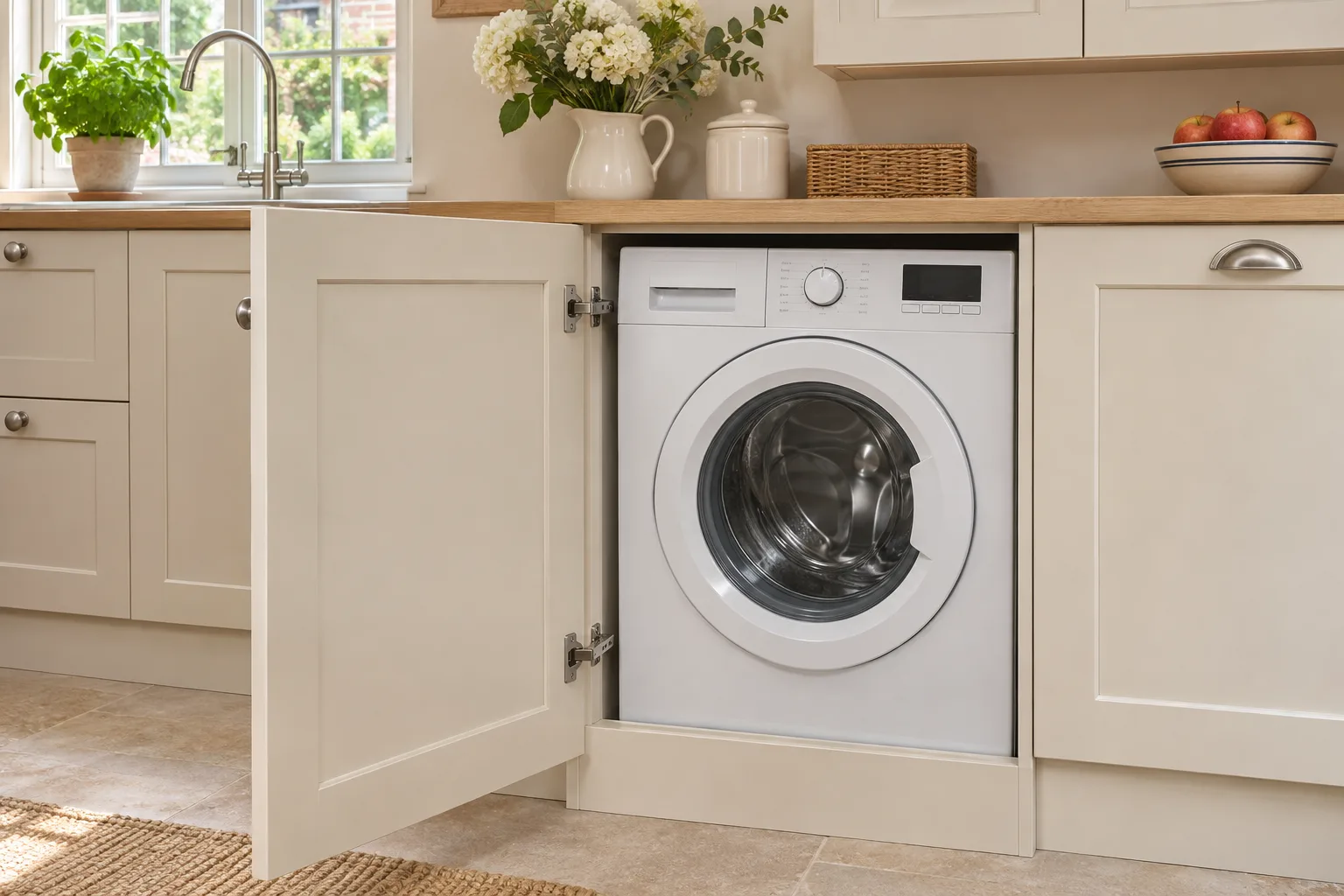
An integrated machine is designed for a fitted opening and a matching cabinet door. You see the kitchen front rather than the appliance, which can work well in a small or open-plan room. The trade-off is a more exacting installation: check the door hinge arrangement, plinth, opening dimensions, hose route and the appliance’s specified ventilation and service access. A built-under machine without a furniture-door fixing is not automatically the same thing.
Freestanding: visible and more flexible
A freestanding machine sits on the floor without a cabinet door attached. It may stand under a worktop if its dimensions and installation instructions allow, but the controls and door remain visible. It is usually simpler to pull out for servicing or replace with another model, although the full depth including its closed door can project beyond a worktop. If front-to-back space is tight, our slim-depth picks show why cabinet-only figures can mislead.
Measure the installation, not just the appliance
Measure the clear opening at several points, the height below the worktop and the distance to water, waste and power connections. Check the machine’s complete installed depth, including door projection and the space its manual requires for hoses. Leave room to open the detergent drawer, door and service filter. Also check the route through the house.
For an integrated replacement, note where the furniture-door hinges attach and whether the old cabinet door can be reused. Mounting patterns differ. Do not assume a new machine will accept the old hinges or sit behind the same plinth without adjustments. Bosch’s washing-machine buying guide distinguishes integrated, built-under and freestanding installations; the exact model manual still decides the clearances.
Compare the whole job, not just the machine price
An integrated model may bring cabinet-door fitting and installation work as well as the appliance cost. A freestanding replacement may be simpler, but removing an existing cabinet front or changing a plinth can still cost money. Ask what delivery, connection, levelling, door fitting and old-appliance removal actually include before comparing quotes.
Running cost is a separate choice. Read the energy label’s kWh per 100 Eco 40–60 cycles and the water figure for the models you can install; then use your own tariff and routine. Neither installation type guarantees a lower electricity bill. Our washing machine running-cost guide shows the calculation.
Which type is right for your home?
| If your priority is… | Start with… | Check before ordering |
|---|---|---|
| A continuous kitchen frontage | Integrated | Furniture-door fixings, plinth, dimensions and installation quote |
| An easier like-for-like replacement | Freestanding | Complete depth, worktop height and connection access |
| The tightest possible fit | Neither by label alone | Exact installation drawing and door/hoses clearance |
| Lower running costs | Compare individual models | Energy-label kWh, water use and your actual programmes |
On a phone, swipe the table sideways to see every column.
Choose integrated if the fitted look matters and the cabinet can accommodate a verified model and door fixing. Choose freestanding if visibility and replacement flexibility matter more. If you are changing from one type to the other, measure and price the cabinetry work before choosing a machine.
Frequently asked questions
Can a freestanding washing machine go behind a kitchen cupboard door?
Not as a simple substitute for an integrated model. The furniture door needs the correct fixings and clearances, and the freestanding machine needs the ventilation and access specified in its own installation manual.
Are integrated washing machines smaller?
They are designed to fit a particular cabinet arrangement, but capacity and overall dimensions vary by model. Compare the exact appliance and furniture installation drawings rather than relying on the integrated label.
Can I replace an integrated washing machine with a freestanding one?
Possibly, but it can mean removing or changing the furniture door and plinth, then checking the opening, connections and ventilation. Measure the full space and ask the installer what alterations are needed.
Which is easier to replace later?
A freestanding machine is usually less tied to cabinet-door fittings. An integrated replacement has to match the opening and door-mounting arrangement, so keep the model and fitting details for future replacement.