

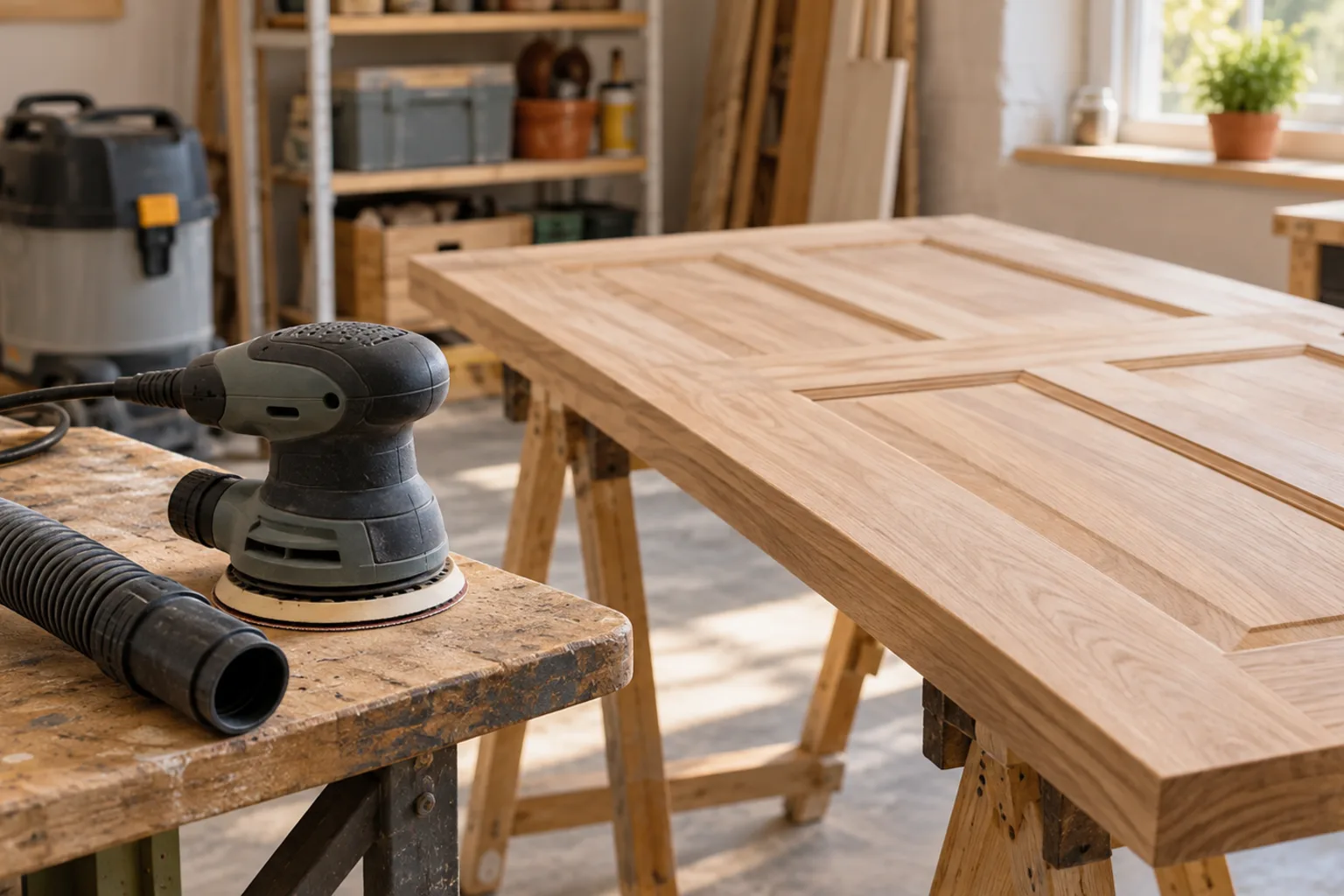
Sanding a door or table can leave fine dust over the room long after you've put the tool away. A sander's own bag helps, but if you're doing more than a small patch, connecting suitable extraction makes the job easier to keep under control. This guide explains what needs to fit together and what to check before you start.
Check what you’re sanding before choosing an extractor
The material matters as much as whether the hose fits your sander. Here’s where to start for bare wood, MDF and older painted surfaces.
Bare wood: Connect the sander to a suitable dust extractor to collect dust as you work. For construction work, HSE recommends an M- or H-class extractor, an antistatic hose suitable for wood dust and secure connections without leaks. It also says most sanding needs respiratory protection, particularly indoors—typically FFP3 protection, with a face-fit test for a tight-fitting mask.
MDF: Plan for dust extraction and suitable respiratory protection here too. Check that the extractor is suitable for MDF dust and follow the board manufacturer’s handling advice. A hose that fits, or a dust bag supplied with the sander, doesn’t by itself confirm that you have adequate protection.
Old paint: Before reaching for the sander, find out whether the coating could contain lead. Don’t dry-sand paint that may contain lead. HSE’s lead guidance explains that sound paint can often be prepared using wet abrasive paper, while flaking paint needs a controlled removal method. If you’re unsure what you’re dealing with, get professional advice before disturbing it.
Once you know the material and the dust controls you need, check the sander and extractor manuals to choose the right hose and adaptor.
Check how the sander connects
Remove the bag or box as the manufacturer directs and look at the tool's dust port. Some systems have a direct, matching hose connector; others need a specific adapter. Don't choose an adapter just because its quoted diameter looks close. Check the exact sander model, extractor hose and connector shape, then make sure the fitted joint is secure and doesn't pull off as you move the tool.
For example, the DeWalt DWE6423-GB is designed for direct connection to DeWalt's AirLock system. That makes sense if you already use a compatible extractor; with another hose, you'd need to verify the adapter. It's an example of a connection system, not a recommendation to buy a second sander simply for its dust port.
Match the disc to the pad
Look at the underside of your sander before ordering discs. The diameter must match the pad, and a hook-and-loop disc needs the right backing. Then check the extraction-hole pattern. If the holes are covered by the disc, the airflow cannot do its job properly. The Bosch sander manual explicitly says to align the holes for effective dust extraction.
Some mesh abrasives offer a more open route for dust, but only use one that's compatible with your pad and work. Our guide to sanding discs and grits covers the fit and grit choice in more detail.
Set up and make a short trial pass
- Inspect the equipment. Check the disc, pad, hose, filter and seals. Fit the connector according to the manuals, with the power disconnected while you change accessories.
- Position the hose. Give it enough slack to move across the work without tugging the pad off flat. Keep the hose and cable away from the rotating disc.
- Turn on the extractor. If it has an automatic tool-start socket, check that the sander and extractor are compatible and within the rated load; otherwise start it as instructed.
- Try a small area. Keep the pad flat and make an overlapping pass. Stop if the hose comes loose or dust escapes noticeably; check the fit, disc holes, filter and airflow before continuing.
- Clean up safely. Follow the extractor's instructions for emptying it and handling collected dust. Don't brush or blow fine dust back into the room; HSE advises suitable vacuum cleaning.
Even a well-connected tool can release dust at edges and when you lift it away. Extraction is one part of the setup, alongside suitable respiratory protection, eye protection and ventilation where appropriate.
Common problems
The hose keeps falling off. Check the exact connector system rather than taping together a loose fit. A pulling hose can spoil control as well as extraction.
Dust still sits on the surface. Check that the disc holes line up, the bag has been removed correctly for external extraction, and the hose or filter isn't blocked. Also check whether the extractor is suitable for the material and task.
The sander feels hard to guide. Support the hose so its weight isn't dragging the tool, and keep the pad flat. More pressure isn't a substitute for the right abrasive.
The built-in bag seems adequate. It may collect visible dust during a very small task, but visible cleanliness doesn't tell you how much fine airborne dust remains. Follow the material-specific guidance rather than judging by the floor.
Choosing a sander if you haven't bought one
Check the port and the availability of a matching adapter or hose before choosing a machine. Then consider the pad size, grip and speed control for the work itself. Our random orbital sander buying guide explains those trade-offs, while the main six-pick comparison includes a DeWalt model whose AirLock connection may be useful if you're already in that system. There's no need for a separate six-pick dust-extraction list that repeats the same machines.
Frequently asked questions
Can I connect any random orbital sander to any vacuum?
No. Check that the tool has a suitable port, that the hose or exact adapter fits securely, and that the extractor is appropriate for the dust. An ordinary household vacuum shouldn't be assumed suitable for wood or renovation dust.
Do I still need a mask if I use extraction?
Often, yes. HSE says respiratory protection is likely to be needed for most wood sanding, particularly in enclosed spaces. Match the protection to the material and task.
Why are there holes in sanding discs?
They let dust travel from the work surface through the pad to the tool's collection system. Align them with the holes in the pad when fitting the disc.
Is a dust bag enough for sanding indoors?
Don't assume so. A bag can catch some debris, but fine dust may still escape. Assess the material and follow appropriate extraction and protection guidance.
Does a cordless sander work with an extractor?
Many models can, but check the exact port and connection. Once a hose is attached, the tool is no longer completely free to move around the room.
Can I machine-sand old painted doors with extraction?
First establish what the coating contains. Extraction does not, by itself, make disturbing potentially lead-containing paint safe; follow HSE guidance and seek competent advice where needed.


 Sign up with Facebook
 Sign up with Google
