

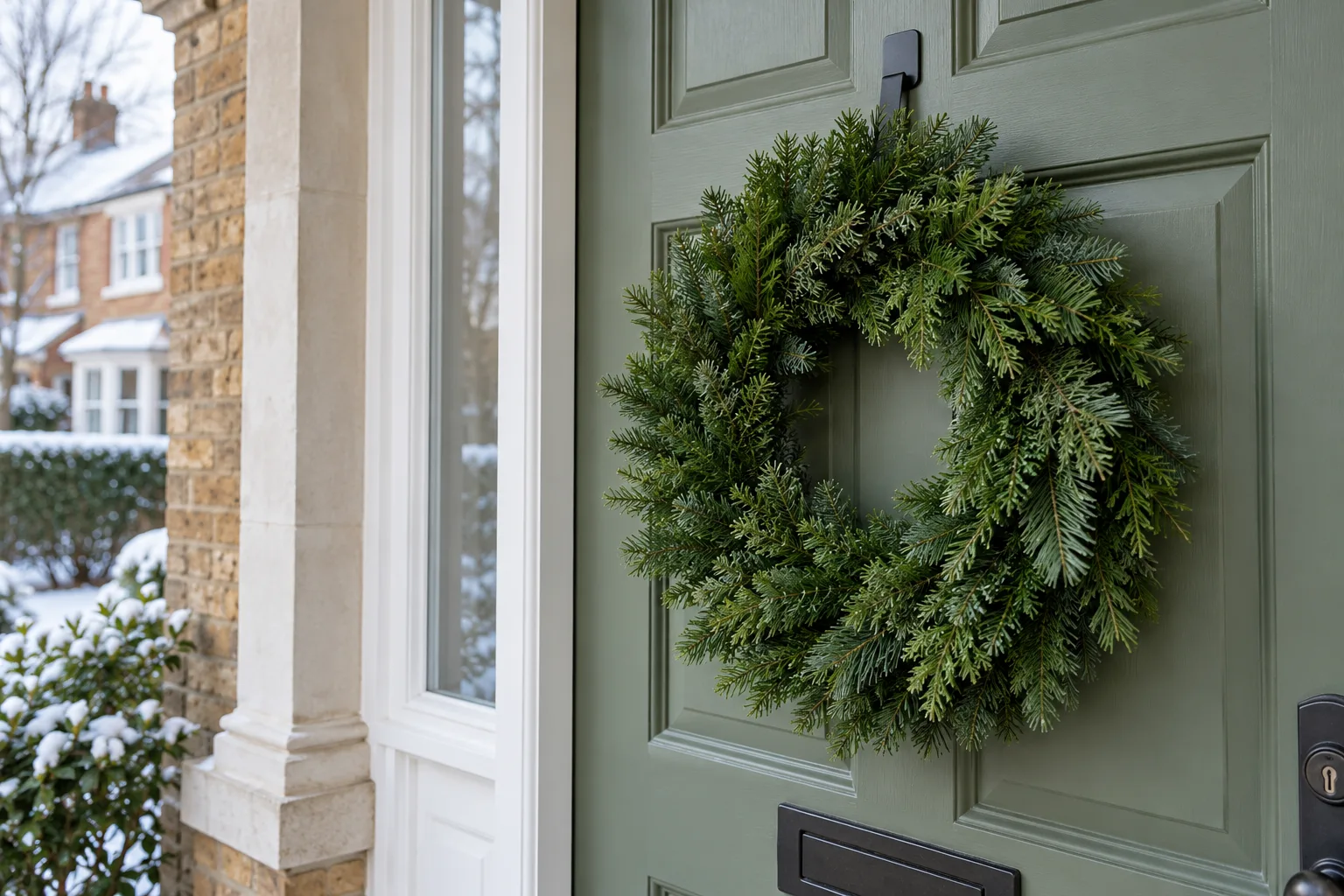
Hanging a Christmas wreath is a lovely way to make your front door feel festive, but you won’t want holes, scratches or peeling paint left behind. From over-door hangers to removable hooks, there are several ways to hang a Christmas wreath without drilling—the right choice depends on your door.
We’ll explain the options for wood, uPVC, composite and glass, plus what to check if you live in a flat. You’ll also find tips on keeping your wreath secure while making sure the door closes properly.
Before you choose a hanger
- Measure the wreath’s width and depth against the handle, knocker, glazing and the space the door swings into.
- Weigh it with the bow and any extra ornaments. The hook’s load rating must cover the full weight.
- Check the finish and the door-maker’s care advice before using adhesive or cleaning products.
- Choose a position away from the latch, weather seals, hinges, closer and letterbox.
- If it is a fire-rated flat entrance door, ask the building’s responsible person what is allowed first.
For a painted timber door
An over-door hanger is usually the first non-drill option to consider. Choose one thin enough for the gap above your door, with a suitable weight rating and a surface that will not rub the paint. Try the door gently before hanging the wreath; if it catches or compresses the seal, stop and use another method.
An adhesive hook is an option only when its maker allows your paint and the door is in good condition. Some hooks require alcohol cleaning and a waiting period before loading. That preparation may conflict with your door finish, so follow the door-maker’s care advice too. Avoid freshly painted, peeling or delicate surfaces and remove the hook exactly as instructed rather than scraping it off.
For uPVC and composite doors
Check the top gap before trying an over-door hanger. A close-fitting uPVC or composite door may not have room for one, and forcing it can affect the seal. Outdoor-rated adhesive hooks are another possibility on compatible smooth surfaces: 3M, for example, names smooth uPVC among the surfaces for one of its outdoor hooks. That is not a promise for every door or every hook. Check its weight limit, preparation and removal instructions against the door-maker’s care guidance.
Do not assume a magnetic hook will work on a composite door. Some doors have a non-magnetic face, and a hook that slips could damage the finish or glazing. Test the material before considering the method.
For a glazed panel
A suction hook rated for more than the fully dressed wreath’s weight may suit clean, smooth glass in a sheltered position. Clean the glass as the hook maker directs, then check the hold regularly, especially after a change in temperature. Keep the wreath light enough that it cannot swing into a handle or strike the glass. Avoid sticking a hook to decorative film or a delicate coating unless its maker explicitly permits it.
For a flat entrance or fire door
Check the building rules before putting anything on a communal or fire-rated entrance door. The government’s fire-door guidance says residents should not alter a fire door without the responsible person’s consent. A wreath must not interfere with the closer, seals or latch. If permission or a suitable fixing method is unclear, use an indoor wall or window instead.
Put it up and check it
Fit the hook according to its instructions, including any surface preparation or curing time. Hang the wreath so its frame or loop bears the weight, not a loose branch. Open and close the door slowly: it should latch normally and the wreath should not rub the frame, handle or glass. Recheck after a windy day. If the hook slips or the finish shows rubbing, take the wreath down and choose another position.
For inspiration on size and style, see our front-door wreath guide. If you add lights, check that the complete set is suitable for the location; Electrical Safety First’s Christmas-light advice explains the outdoor checks.
When Christmas is over
Remove the wreath before it catches in winter wind or gathers water against the door. Take adhesive strips off using the maker’s removal method; do not prise them up with a metal tool. Wipe any contact area only with a cleaner approved for the door finish, then let the wreath dry before storing it. Check the hook and frame for wear before reusing them next year.
Frequently asked questions
Will an over-door wreath hanger damage a uPVC door?
Not necessarily, but the hanger can rub, leave a mark or stop a close-fitting door sealing properly. Check the door and hanger instructions, clearance and any finish protection before using one.
Can I use an adhesive hook on a painted front door?
Only if its instructions allow that paint and the wreath’s weight. Check how the hook must be applied and removed, and compare that preparation with the door-maker’s cleaning advice. Do not use it on fresh, peeling or delicate paint.
How can I hang a wreath on a glass panel?
A suction hook designed for clean glass and rated above the wreath’s weight may work in a sheltered position. Check it regularly and keep the wreath from striking the glass or door handle.
Can I use a ribbon over the top of the door?
Only if it can be secured without interfering with the door closing, latching, seals or any closer. Do not use this method on a fire door without permission from the person responsible for it.
Are magnetic wreath hooks suitable for composite doors?
Do not assume so. Many composite and uPVC door faces will not hold a magnet. Test the material and follow the hook maker’s rating; choose another method if there is no secure hold.
What if my flat door is fire-rated?
Ask the building’s responsible person and follow its rules before attaching a wreath. Do not drill into or alter a fire door, cover its seals or obstruct the closer and latch.
What to do next
Start with the door type and the wreath’s full weight, then choose a method that lets the door work exactly as it should. If a hook cannot meet the finish, load and clearance requirements together, use a different display spot rather than forcing the fit.



 Sign up with Facebook
 Sign up with Google
