

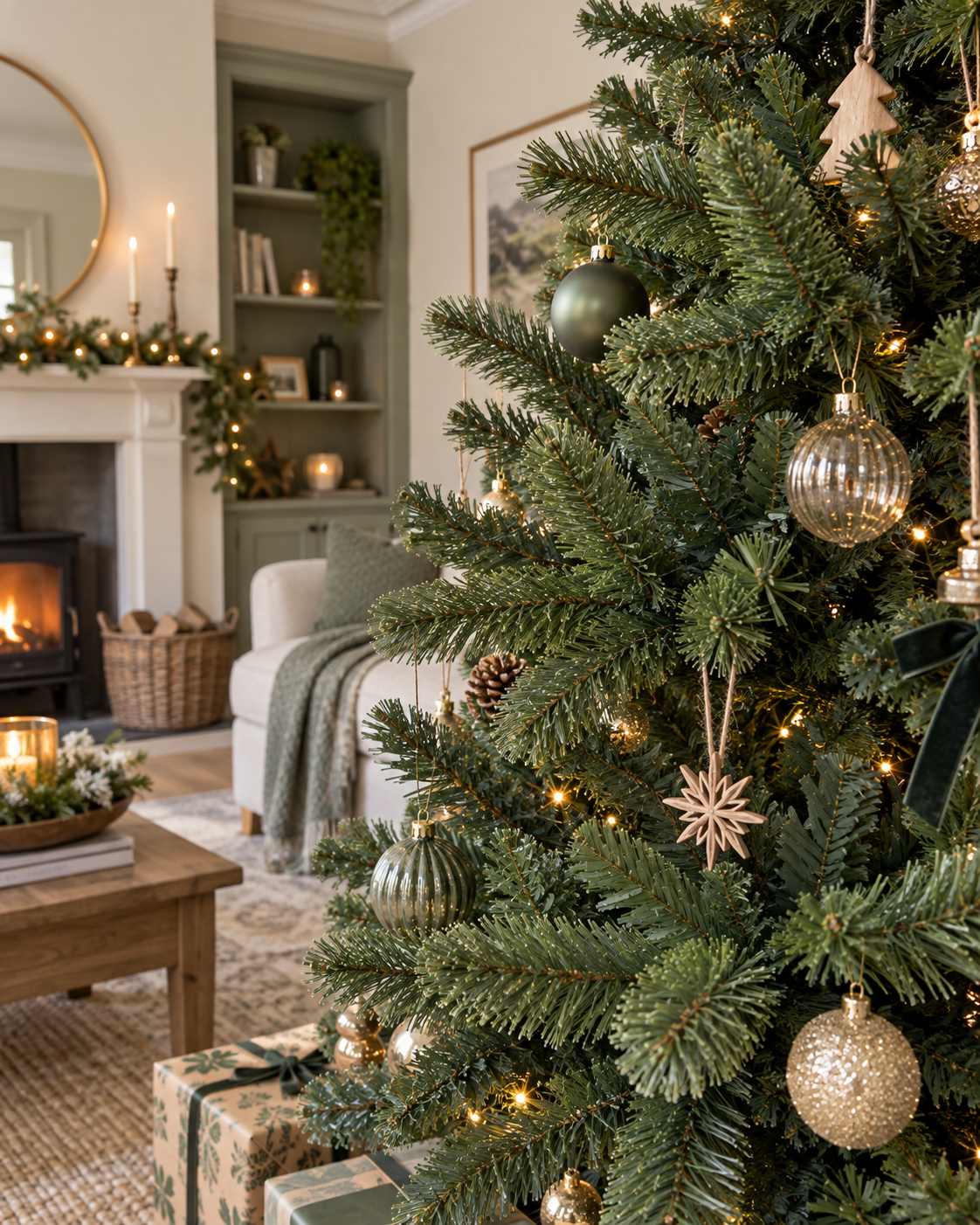
PE usually wins on close-up realism; PVC can still make a tree look full and festive from across a room. Most shoppers do not need to choose one material exclusively. A mixed tree often puts moulded PE tips where you can see them and uses flatter PVC nearer the trunk.
The useful question is not simply “does it contain PE?” It is where the moulded tips sit, how convincingly the whole tree is shaped, and whether the finished footprint suits your room. Our realistic-tree guide covers the wider picture; this page focuses on the foliage itself.
1. What PE and PVC actually mean
PE is polyethylene. Its artificial-tree tips are moulded into three-dimensional shapes that can resemble a real fir branch. PVC is polyvinyl chloride, commonly cut into flatter strips and twisted onto wire stems. The distinction is about construction and appearance, not a guarantee that one finished tree will look better.
Balsam Hill’s foliage guide shows the two constructions and explains why manufacturers combine them. “Mixed PE/PVC” alone does not tell you the proportions or whether the most visible branches are moulded, so inspect close-up photographs of the exact height you are buying.
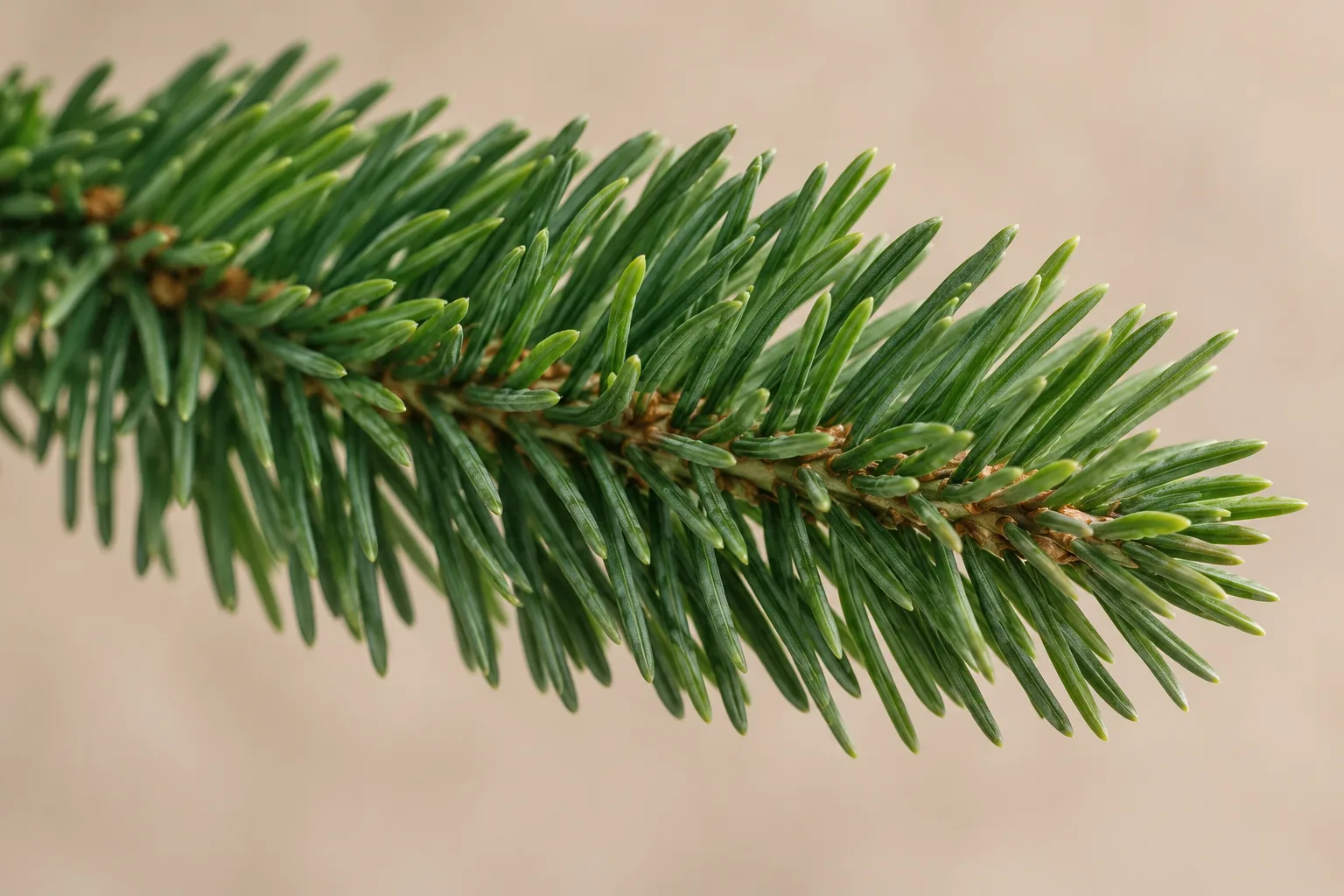
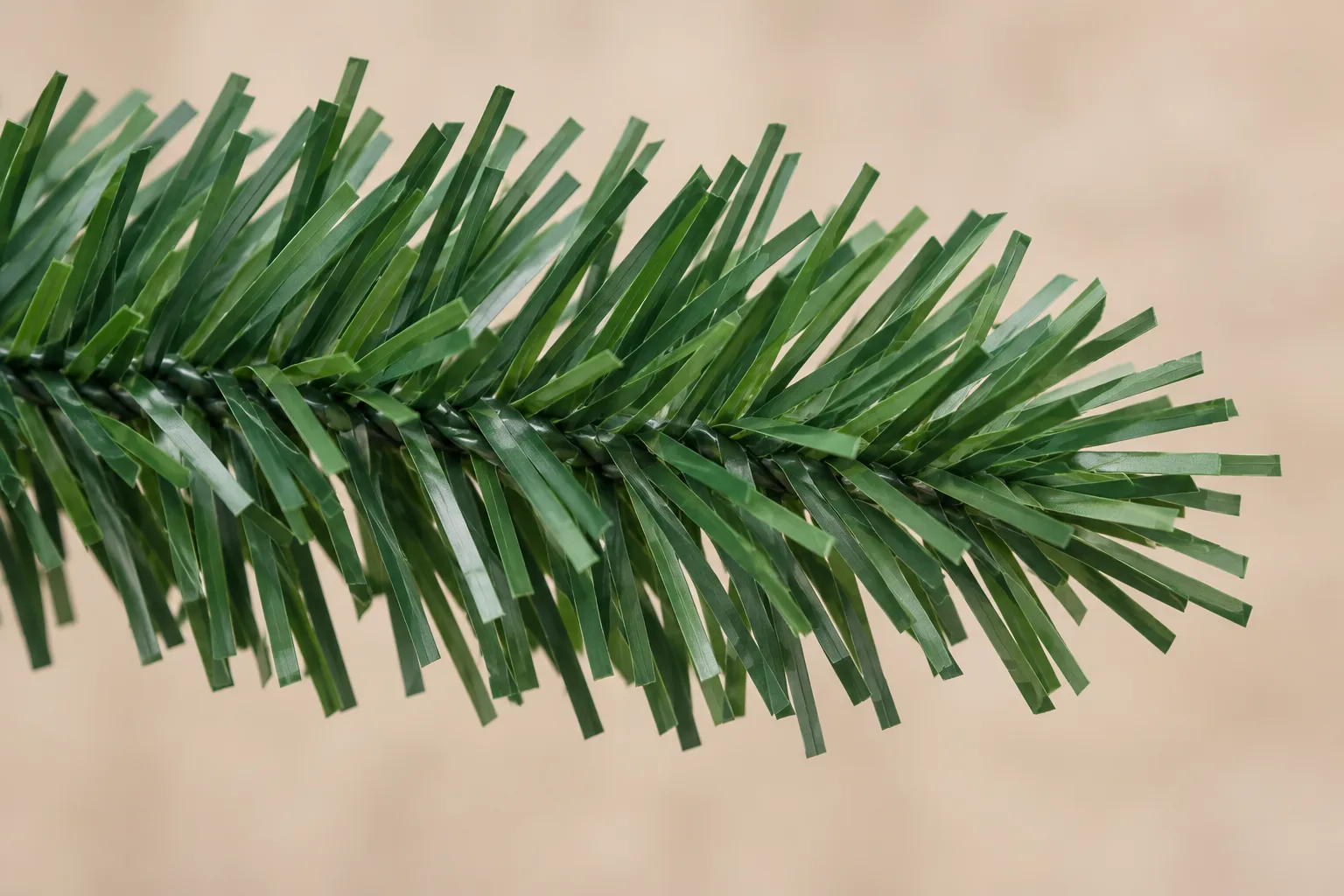
| What to compare | Moulded PE tips | Cut PVC tips |
|---|---|---|
| Close-up look | Three-dimensional needles and branch shapes can resemble a real tree. | Flatter strips have a familiar artificial-tree appearance. |
| Useful position | Outer branches, where their shape is visible. | Inner branches, where volume can hide the trunk. |
| Fullness | Depends on tip placement, length and shaping, not material alone. | Can fill the centre effectively, but a sparse layout still looks sparse. |
| Buying check | Ask how much PE is visible on the actual variant. | Check the full-tree silhouette and branch density. |
On a phone, swipe the table sideways to read all three columns.
2. Which looks more realistic in a living room?
At arm’s length, a well-moulded PE tip usually has more depth than a flat PVC strip. From the sofa, the outline, colour variation and gaps around the trunk can matter more. A tree described as “100% PE” is not automatically the best-looking choice if its branches are thinly spaced or poorly opened.
Look for an undecorated full-tree photograph and a close-up of the outer tips. Heavy ornaments and lighting can disguise gaps. Customer photographs can help, but confirm that they show the same height and variant. Our best artificial Christmas trees comparison includes different foliage and room footprints.
3. Is a PE/PVC mix a compromise?
Not necessarily. Placing moulded tips on the outside and flatter filler branches inside is a sensible way to balance appearance and volume. A mixed tree can look more convincing than a poorly arranged all-PE tree. But listings rarely tell you exactly where each material is used, so the photographs and maker description matter more than the two-letter badge.
Do not read a seller’s tip count as a universal quality score. Brands count and size tips differently. Judge the opened tree, its stated width and the view you will actually see in your room.
4. Feel, shaping and storage
Both types need shaping when they come out of the box. Start near the trunk, fan inner foliage to cover the pole, then angle visible tips in several directions. PE tips can retain a more sculpted profile, but do not crush them into a tight storage box; PVC branches also need room and careful folding. Follow the exact maker’s storage instructions and keep the tree dry.
If fast setup matters, branch attachment is a separate choice from foliage material. Our hinged versus hook-on guide explains that trade-off.
What to check before ordering
- Close-ups: can you see the outer needle shape on the exact model?
- Full-tree image: is the tree shown undecorated and fully opened?
- Material description: does the listing say where PE and PVC are used, or just mention both?
- Height and spread: measure ceiling and floor space; treat seller item dimensions as estimates until the assembled diameter is clear.
- Lighting and assembly: decide separately whether you want built-in lights and attached branches.
Frequently asked questions
Is PE better than PVC for an artificial Christmas tree?
PE moulded tips can look more like real needles close up. PVC can add useful fullness. The finished silhouette and placement of the tips matter more than the material label alone.
What does 100% PE mean on a Christmas tree?
It means the seller describes the foliage as PE rather than a PE/PVC mix. It does not guarantee a full shape or realistic appearance; inspect photographs of the exact variant.
Can a mixed PE/PVC tree look realistic?
Yes. Moulded PE on visible outer branches and PVC nearer the trunk can combine close-up detail with a fuller centre.
Are PVC trees always cheaper?
PVC foliage is generally simpler to produce, but final prices depend on tree size, lighting, construction and brand. Compare the actual model, not material alone.
Do PE trees still need fluffing?
Yes. Open the inner branches first and angle the outer tips to cover gaps. Moulded foliage does not arrive looking like a styled product photograph.
Choosing the right foliage for your tree
Pick PE for convincing outer needles, PVC for a traditional fuller-looking centre, or a well-executed mix. The material label is only a starting point. A tree that is shaped carefully and fits your room will look better than a more expensive specification squeezed into the wrong space.


 Sign up with Facebook
 Sign up with Google
