
You can add a rechargeable light beneath a cupboard this afternoon, but you’ll have to take it down to charge. A plug-in bar keeps working while the socket is on, yet its lead needs a tidy route. If you’re renovating the kitchen, you may also be deciding whether to plan a more permanent supply. Here’s how to choose the power arrangement that fits the way you use the room.
Plug-in or hardwired: what’s the difference?
Mains-powered under-cabinet lights can either plug into a suitable socket or be wired into your home’s electrics. A complete plug-in kit can be convenient for updating an existing kitchen, while a hardwired system needs more planning and may require a separate driver, switch and connecting leads. The driver converts mains electricity to the voltage the lights need. Even if the lights themselves run at low voltage, any work on the fixed mains wiring should be handled by a qualified electrician.
This distinction matters when you compare costs and effort. A bare light bar may look cheaper than a ready-to-use kit, but won’t necessarily include the supply, connectors or control it needs. Sensio’s under-cabinet guide shows how its light fittings and driver work together; always check the exact maker’s compatibility rules.
When rechargeable lighting makes sense
A rechargeable bar suits a cabinet without a convenient socket, a temporary kitchen update or a small area where you only need light now and then. Magnetic mounting can make charging easier if the product includes it. A sensor may help inside a cupboard, though think about whether you want the worktop light to remain on throughout cooking rather than switching off when you stand still.
The trade-off is charging. Compare the stated runtime at the mode and brightness you’d actually use, whether the light can be removed easily, and whether a USB cable and wall adapter are included. A “weeks of use” claim in sensor mode isn’t a promise of weeks of continuous worktop light. Our rechargeable under-cabinet light comparison shows different lengths and controls.
When a plug-in kit is easier to live with
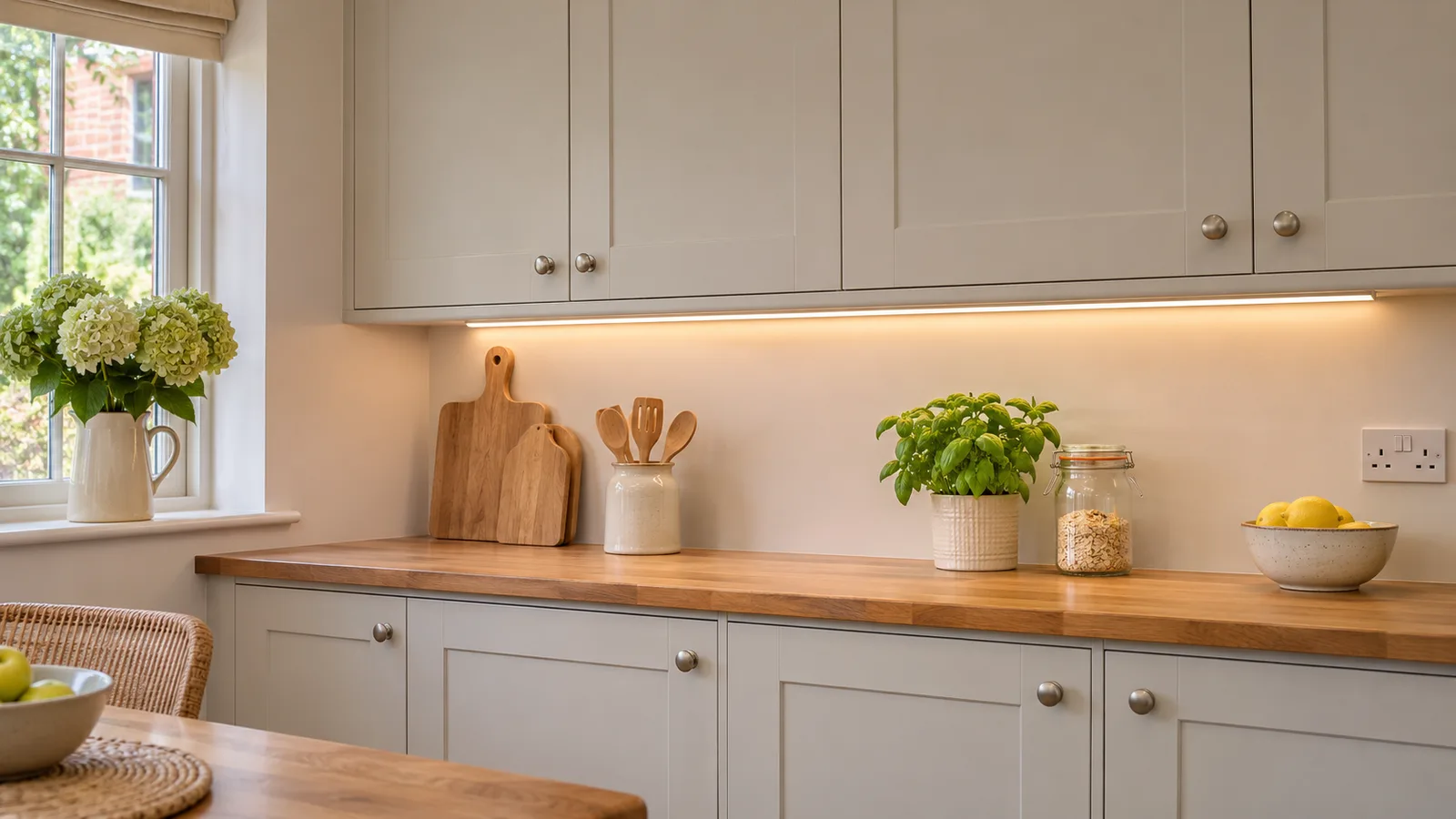
For a worktop used every day, a plug-in strip or linked bars avoid a charging routine. They can be a sensible update to an existing kitchen if a suitable socket is within the permitted cable route. Check the length of the supplied lead, whether a UK plug and the correct driver are included, how you’ll switch the lights on, and whether the kit permits extra bars.
Plan where the cable will go before attaching anything. Keep it away from the hob, splashes and places where cupboard doors or stored items could catch it. Electrical Safety First’s kitchen guidance explains why water, heat and trailing cables deserve attention in this room. Don’t turn a plug-in kit into a hardwired one by cutting off its plug unless its manufacturer explicitly provides for that work and a competent electrician carries it out.
When a planned installation earns its keep
If you’re replacing cabinets or having electrical work done already, it’s worth discussing light positions, switching and a discreet power route before the units go up. That can give you a more integrated result than trying to hide a lead afterwards. It also gives the electrician a chance to confirm the right supply and installation for your chosen fittings. It’s a larger project than attaching a ready-made plug-in light, so it makes most sense when you want permanent lighting across several runs.
Make the choice for each part of the kitchen
You don’t have to use one power type everywhere. A plug-in run could light the main preparation counter while a rechargeable bar makes a pantry easier to see. The deciding questions are how often the light will be on, how wide the work area is, whether a safe cable route exists and how willing you are to charge the lights.
If you’re unsure how many fittings will fit, use our under-cabinet light sizing guide before shopping. The broader under-cabinet lighting comparison includes plug-in and rechargeable examples.
Keep electrical work in the right hands
Follow the supplied instructions when attaching a complete rechargeable or plug-in light. If the project needs a new socket, fixed connection or changes to a lighting circuit, use a competent electrician. Electrical Safety First advises against DIY electrical work; don’t use a product’s low-voltage lamp as a reason to work on its mains supply yourself.
Frequently asked questions
Are plug-in under-cabinet lights hardwired?
No. A complete plug-in kit uses an existing suitable socket. Hardwired lighting connects to the fixed electrical installation and is a job for a competent electrician.
Can rechargeable lights be my main kitchen task lighting?
They may suit a short work area, but check their stated output and continuous-on runtime for your routine. If you prepare food there daily, the charging burden may make a suitable plug-in or planned system easier.
Do all mains-powered lights include a plug?
No. Check the exact package for the plug, driver, connectors and switch. “Mains-powered” alone doesn’t tell you whether it’s a complete plug-in kit or a component for installation.
Which is cheaper to run?
Running cost depends on the actual power used and how long the lights are on; a rechargeable light still uses electricity when charged. Compare the whole purchase and installation cost as well as day-to-day use, rather than assuming one power type is always cheaper.