

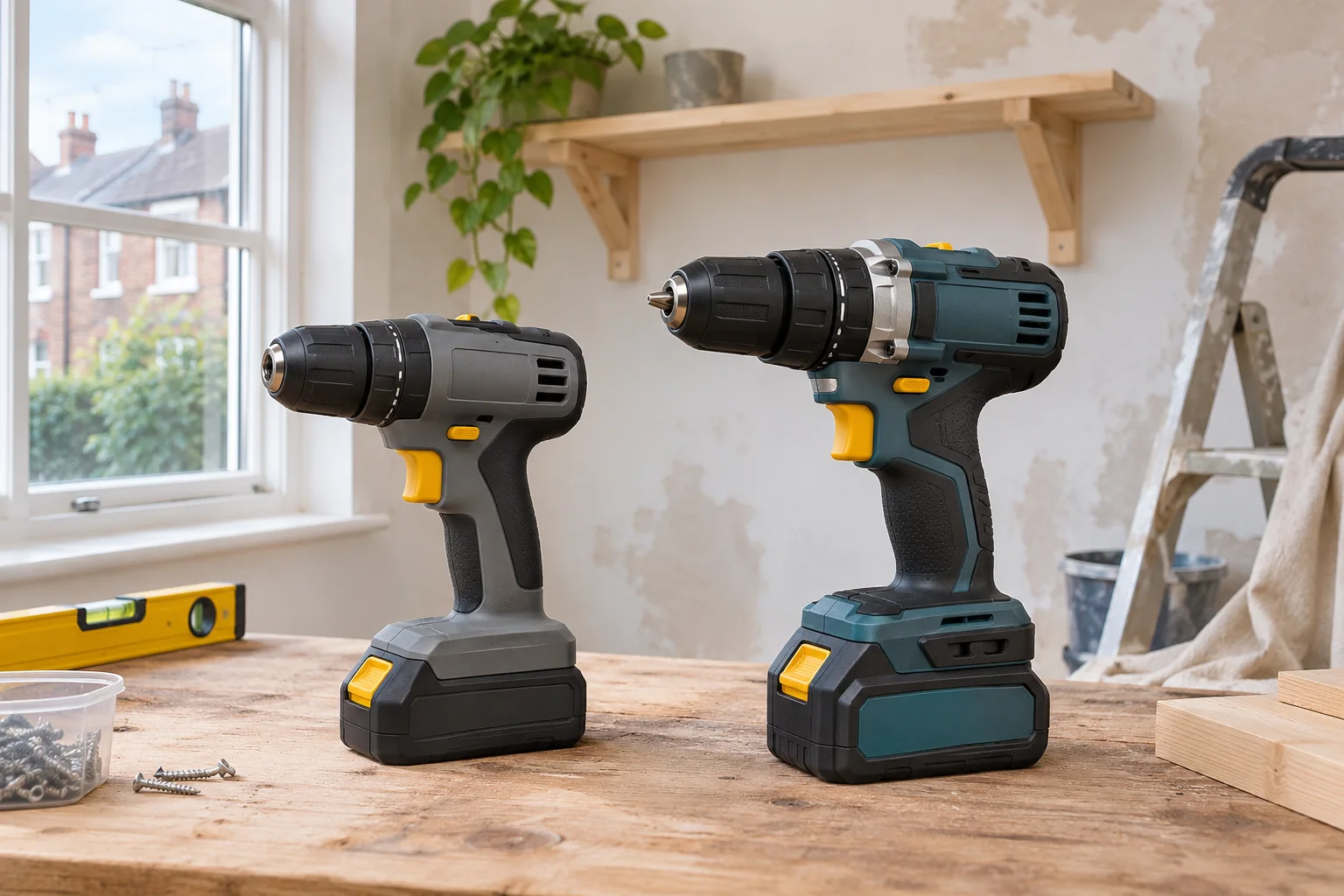
If you’re shopping for a cordless drill, you’ll probably come across both brushed and brushless models and wonder whether the price difference is worth it. We’ll explain how the motors differ and what that means for everyday jobs, so you can decide whether a brushless drill is worth paying extra for.
What do “brushed” and “brushless” mean?
Inside a brushed motor, small carbon brushes make contact to pass electricity to the turning part. They wear with use. A brushless motor controls that electrical switching electronically, without those rubbing contacts. That can mean less motor wear and better efficiency, but it doesn't make every brushless drill stronger than every brushed one. Bosch's motor guide explains the efficiency and wear difference.
| Question | Brushed | Brushless |
|---|---|---|
| Motor design | Uses carbon brushes that wear over time. | No carbon brushes in the motor. |
| Battery use | May use more power for comparable work. | Can be more efficient; actual runtime still depends on the whole drill and battery. |
| Best fit | Occasional home DIY when the kit and handling are right. | Regular projects or buyers who value efficiency and lower motor maintenance. |
On a phone, swipe the table sideways to see every column.
Will a brushless drill run longer?
It can, but don't compare a brushless tool with a large battery against a brushed tool with a small one and credit the whole difference to the motor. Battery capacity, the work, drill gearing and how hard the bit is cutting all affect runtime. If you're buying a kit, check the number and size of the supplied batteries. Two modest batteries may suit a day of stop-start jobs better than one larger battery if you can charge a spare while working.
For drilling hard materials, the right bit and drill type matter too. A brushless combi drill isn't a substitute for an SDS rotary hammer when you need repeated large holes in hard masonry. Electrical Safety First's drill guide sets out those tool differences.
When is brushless worth paying for?
If you're regularly drilling timber, assembling fitted storage or working through several rooms, the extra efficiency and reduced motor wear can be useful. It may also make sense if the brushless kit comes with a battery platform you want to keep using. But for a few shelves and occasional furniture assembly, a comfortable brushed drill with the right modes and a complete kit can be better value than a bare brushless tool that still needs a battery and charger.
Look at the complete offer rather than the motor label alone: battery count and capacity, charger, case, chuck size, grip and the range of compatible tools. Our cordless drill buying guide walks through those choices.
What about torque and control?
Torque is the drill's turning force. A high maximum figure can help on demanding jobs, but control matters when you're driving a small screw into a cupboard hinge. An adjustable clutch helps you stop the screw before it goes too far. A gentle trigger and a lower speed range can make a drill easier to use than a headline torque figure suggests. Motor type alone doesn't tell you how a drill will feel in your hand.
Use the right drill for the surface
Brushed and brushless drills can both be drill drivers or combi drills. A drill driver suits screws, timber and metal. A combi drill adds a hammer setting for suitable masonry. Switch that setting off for wood and metal, and choose the correct bit for the material. For common bit and fixing choices, see our drill accessories guide.
How we put this guide together
We compared how the motor designs affect maintenance and efficiency, then considered the kit and control choices a home renovator actually faces. The motor explanation draws on manufacturer information; we haven't measured runtime or tested these drills hands-on. Our six-drill comparison includes both motor types and explains why each complete kit earned its place.
Frequently asked questions
Is a brushless cordless drill always better?
No. Brushless motors can be more efficient and need less motor maintenance, but the right choice also depends on the drill's handling, modes, battery platform and complete kit.
Is a brushed drill good enough for home DIY?
Often, yes. A suitable brushed drill can handle occasional screws and drilling around the home. Check that it has the mode you need for the material and that the battery and charger are included if you don't already own them.
Does brushless mean more torque?
Not by itself. Torque depends on the complete drill design, not just whether the motor has brushes. Compare the exact models and consider control as well as the maximum figure.
Can I use a brushless combi drill for concrete?
Motor type doesn't change the job a combi drill is designed for. For hard concrete or repeated larger masonry holes, choose a suitable SDS rotary hammer and bit instead.
Make the kit decision first
Brushless is a useful advantage when you'll use the drill often, but it shouldn't distract from a kit that fits your work. For occasional jobs, a comfortable brushed drill with the right accessories may be all you need.

 Sign up with Facebook
 Sign up with Google
