

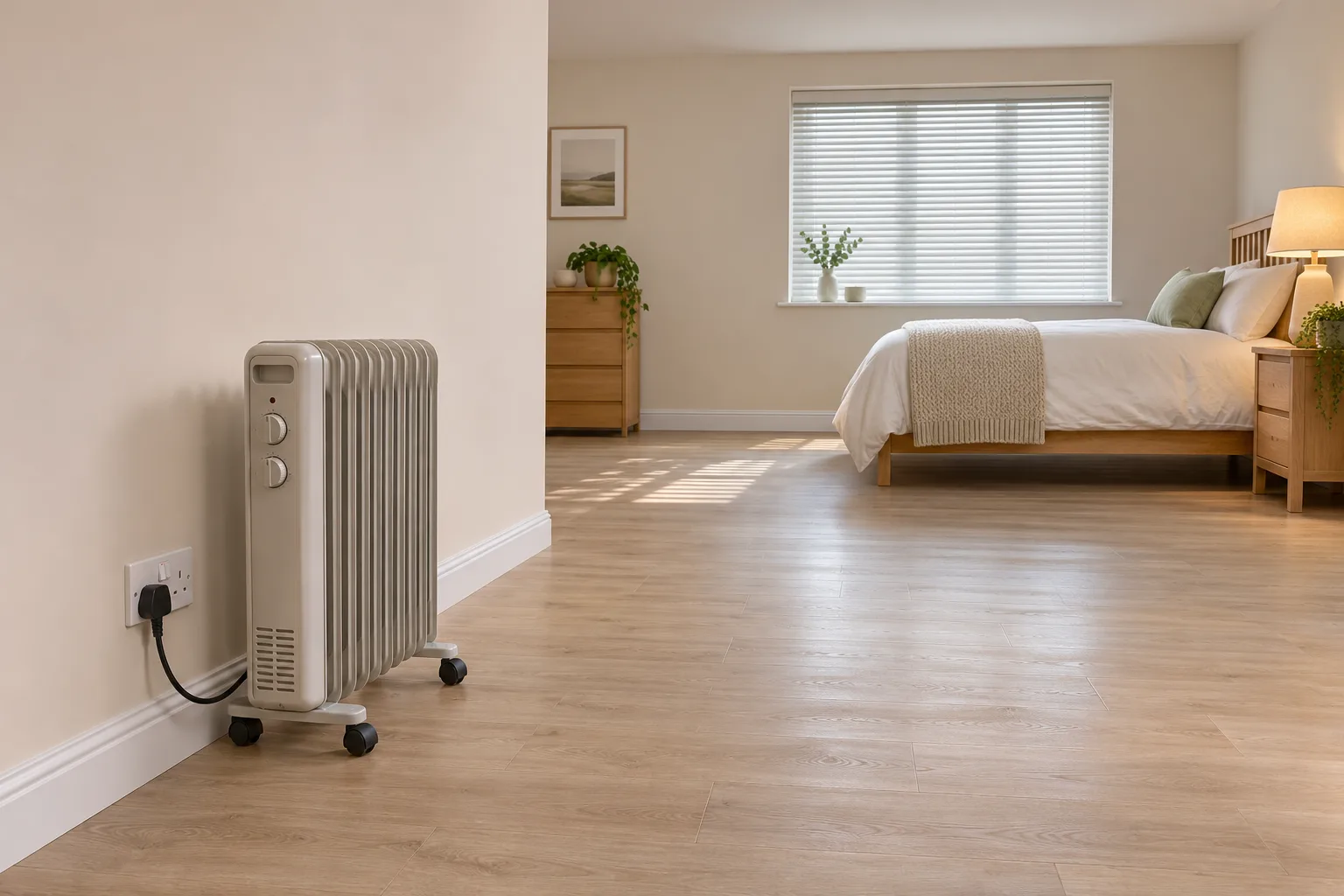
Dust collects between an oil-filled radiator’s fins just as it does behind the sofa, especially after a winter of regular use. A little cleaning helps keep the outside tidy, but the sealed oil inside is not something you need to top up or service yourself.
This guide explains how to clean an oil-filled radiator safely, what to check before using it again and when a fault needs professional attention. The manual for your exact model takes priority, particularly for cleaning the controls and casing.
Switch off, unplug and let it cool
Turn the radiator off, unplug it from the wall socket and wait until the whole body is cool. Move it only when cool and stable, keeping the cable out of the way. Check the maker’s instructions before using a cloth or attachment on the controls.
Different manuals allow different cleaning methods. A Dimplex oil-filled radiator manual says to disconnect power and cool the heater, use a dry cloth for dust, and a damp (not wet) cloth for stains. Other models may specify different cleaning methods, so don’t assume water is suitable for yours.
Clean the outside and the gaps
Wipe the casing and accessible fin faces with a soft cloth. For dust trapped between fins, use a soft brush or a vacuum crevice attachment gently; avoid forcing it into narrow spaces or scraping the finish. Keep liquids away from switches, displays, plugs and sockets. Never spray cleaner directly onto the heater or immerse any part of it.
If the radiator has wheels or feet, remove loose dust around them while it is cool. Check they remain secure before you put it back on a level floor. There is no reason to dismantle the sealed radiator for ordinary household cleaning.
Give the heater a quick condition check
Before plugging it in again, inspect the cable and plug for wear, heat marks or damage, and look for dents or signs of an oil leak. If you notice a hot plug, buzzing socket, repeated tripping or anything unusual, stop using it and ask the manufacturer or a qualified repair technician for advice. Electrical Safety First gives the same stop-and-check advice for damaged electrical products.
Return the radiator to a clear, level position. Keep combustible materials such as curtains, furniture and paper at least one metre away, plug it directly into a wall socket and never cover it or use it to dry clothes. Let the heater cool before moving it to another room.
Leave the oil sealed inside
An oil-filled radiator is not like a central-heating radiator that you bleed. The oil is sealed for the appliance’s life and should not need topping up. Dimplex says its oil-filled models are sealed and should not leak in normal use. If you suspect a leak, switch off and stop using the heater; contact its manufacturer or authorised service provider. Don’t try to open the body or repair a leak yourself.
Put it away carefully when winter ends
Once the radiator is clean, dry and fully cool, wind or secure the cable as its manual directs, without sharply bending it around the plug. Store it upright in a dry place where the controls and wheels will not be knocked. When it is beyond safe repair, use Recycle Your Electricals’ locator or ask your local council about an appropriate electrical recycling point rather than putting it in household rubbish.
If you are deciding whether to keep an ageing model, our buying guide explains the controls and safety features worth comparing. For a room that stays cold, check the sizing guide before replacing one heater with another of the same output.
Frequently asked questions
Do I need to change the oil in an oil-filled radiator?
No. The oil is sealed inside and is not a routine refill or replacement job. Do not open the radiator; contact the maker or an authorised service centre if you suspect a leak.
Can I wipe an oil-filled radiator with a damp cloth?
Only if the manual for your exact model allows it. Unplug the heater and let it cool first. Some makers specify a soft, dry cloth; others allow a lightly damp cloth. Never immerse it or let water enter the controls.
Can I vacuum between the fins?
Once the radiator is unplugged and cool, a soft brush or suitable vacuum attachment can lift dust from accessible gaps. Avoid scraping the finish or pushing anything into the controls.
What if the radiator smells or leaks?
Switch it off, unplug it when safe and stop using it. Contact the manufacturer or a qualified repair professional, particularly if there is a suspected oil leak, damaged cable or scorched plug.