

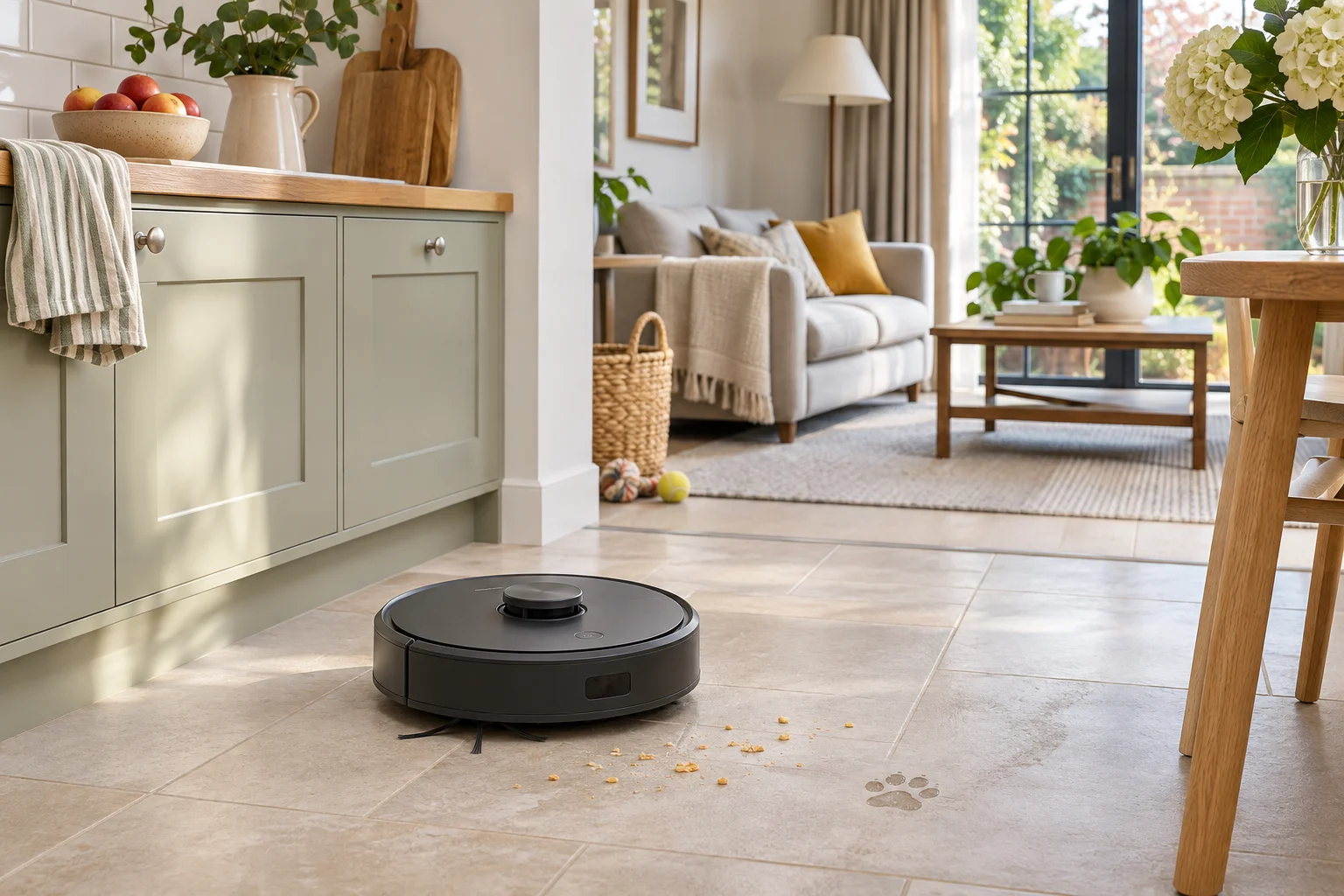
Kitchen crumbs are a different job from the muddy marks by the back door. A vacuum-only robot can keep loose debris under control; a vacuum-and-mop model adds damp cleaning, but also brings a floor-care decision and more parts to maintain.
We’ve compared the two setups so you can choose what suits your rooms and routine. The right answer depends less on a long feature list and more on how much mop-safe flooring you have, whether rugs sit beside it and how often you’d actually use the mop.
Vacuum-only versus vacuum-and-mop at a glance
| Vacuum-only robot | Vacuum-and-mop robot | |
|---|---|---|
| Everyday job | Loose dust, hair and crumbs | Loose debris plus light damp cleaning on suitable floors |
| Floor mix | Simple choice where carpets and rugs dominate | Useful where a substantial area of hard floor can be damp-cleaned |
| Upkeep | Bin or dock bag, brushes, filters and sensors | Those jobs plus mop cloth or roller, water tanks and sometimes a wash dock |
| Space | Can have a compact charge or self-empty dock | Full-service wash docks are often larger; measure the exact model |
On a phone, swipe the table sideways to read all three columns.
When a vacuum-only robot makes sense
Choose vacuum-only if carpets or rugs cover most of the home, you prefer to mop by hand, or the flooring maker advises against regular damp cleaning. It’s also easier to live with if you don’t want dirty-water tanks to empty. A self-empty dock can reduce how often you handle dust, but check bag costs and the space it needs.
For a small kitchen and mostly carpeted rooms, paying for a sophisticated mop station may add little to your weekly routine. Our broad robot vacuum comparison includes both vacuum-only and combined options.
When a vacuum-and-mop robot earns its space
A combo is more useful when a good share of your home has tiles or another floor approved for damp cleaning. It can collect crumbs and give that floor a light clean on a regular schedule. A simple cloth is fine for an occasional pass, while spinning pads or a self-rinsing roller may suit repeated kitchen marks. None removes the need to deal with spills promptly or clean difficult edges by hand.
The mop system matters as much as the vacuum. Check whether the machine lifts or removes the mop around carpet, how it avoids rugs and what you’ll do with the dirty water afterwards. Our hard-floor robot guide compares five different mop approaches.
Check your floor before using water
Follow the care instructions for the exact flooring, not a generic “hard floors” label. Karndean’s care advice discusses suitable damp cleaning for its floors and checking vacuum suitability. Quick-Step warns about moisture around laminate edges. Unsealed timber, damaged joints or a floor with a different warranty may need a gentler approach. Check the robot maker’s approved water setting and cleaning solution too.
What you’ll still have to do
With either type, you’ll need to clear cables and small toys, inspect brushes, clean sensors and look after the dust bin or dock. A mop adds a cloth, pads or roller to wash or replace. A full-service dock may do some washing and drying, but you still have to fill clean water, empty dirty water and clean its tanks. Compare the exact consumables before buying; our buying guide covers dock and running-cost checks.
Which setup should you choose?
For mostly carpet and a modest amount of hard floor, we’d favour a good vacuum-only model and keep a normal mop for occasional spills. For a kitchen, hall and living area with plenty of mop-safe flooring, a combo can take more of the routine work off your hands. If the mop will only come out once a month, choose the simpler system you’ll actually maintain.
FAQs
Can a combo robot vacuum and mop at the same time?
Some can, but cleaning modes differ by model. Check whether the exact machine can vacuum first, mop afterwards and keep its mop clear of carpet if that matters in your home.
Will a robot mop replace a normal mop?
It can help with regular light marks on a suitable floor, but spills, stubborn patches and awkward edges may still need hand cleaning.
Is a vacuum-only robot better for carpets?
It can be the simpler choice when carpet dominates because there is no wet mop to manage. Compare the exact robot’s carpet handling and brush maintenance rather than assuming every vacuum-only model performs alike.