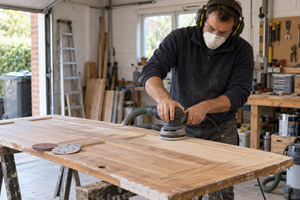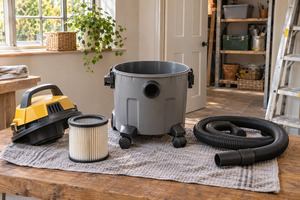

Dust from sanding a door or cutting boards has a way of settling well beyond the room you are working in. A dust extractor connected at the tool can catch much of it before it spreads, but the right machine depends on the material, the tool connection and how often you work.
These are five of the best dust extractors for home renovation and workshop jobs, from compact dry machines to larger wet-and-dry models. We have focused on M-class machines because they are more appropriate to common construction-dust tasks than a general household vacuum; the right control still depends on a task assessment and the complete tool-and-extractor setup. If you need help choosing the class and fittings first, start with our dust extractor buying guide.
Quick picks
Compare the five dust extractors
| Model | Best fit | Collection size | Tool start | Filter cleaning |
|---|---|---|---|---|
| Metabo ASA 30 M PC 240V | All-round tool-connected pick | 30L tank | Yes | PressClean manual |
| Trend T32 240V | Lower-cost m-class option | 20L tank / 15L bag | No | Manual filter shake |
| V-TUF MINI X2 240V | Compact pick for moving between rooms | 15L dry tank | No | Manual filter shaker |
| Vacmaster WD M38 PCF 240V | For larger mixed cleanups | 38L tank | Yes, 1,490W max | Push Clean |
| Festool CTM MIDI I 230V | Compact premium choice | 15L tank / 12.5L bag | Yes, 1,800W max | Manual dedusting |
On a phone, swipe the table sideways to see every column.
Tank size is not the same as usable bag capacity. Check the bag, filter and hose supplied with the exact model before comparing sizes alone.
Best all-round tool-connected pick
1. Metabo ASA 30 M PC 240V

The Metabo combines a 30-litre tank with a four-metre hose and an eight-metre cable, so you can move around a room without keeping the machine right beside your tool. Its power-tool socket starts and stops the extractor with a connected tool, while PressClean clears the filter during a pause without dismantling it. It also handles wet pickup when set up as the manual directs. At 10.8kg before collected debris, it is less convenient to carry up stairs than the compact models.
At a glance
M class; 1,200W motor; 30L tank; 4m anti-static hose; 8m cable; automatic tool start.
What to check
Check that the supplied coupler fits your tool and follow Metabo’s instructions for bags, filter cleaning and changing between wet and dry pickup. Confirm the tool-socket power limit for your equipment before connecting it.
Choose it if: You want one M-class machine for regular tool-connected work and occasional wet cleanup.
Skip it if: You need the lightest machine for carrying between rooms.
Best lower-cost M-class option
2. Trend T32 240V

The T32 gives you M-class extraction without paying for an automatic tool socket. Its three-metre hose can reach a bench or a nearby power tool, and the supplied adapter helps with connections. The compact steel container is easy to place in a small workshop. There’s no automatic tool start, so remember to switch the extractor on before you begin work.
At a glance
M class; 800W motor; 20L container with 15L bag capacity; 3m hose; 5m cable.
What to check
This is for dry pickup. Check the hose-to-tool connection and use suitable bags; the 20L container is not the usable bag capacity.
Choose it if: You want an M-class machine for smaller dry jobs and can live without automatic start.
Skip it if: A tool-triggered socket or wet pickup is important to you.
Best compact pick for moving between rooms
3. V-TUF MINI X2 240V

The MINI X2 is a handy size for snagging and shorter jobs where dragging a full-size extractor through the house would be awkward. Its long cable and extendable hose give you more freedom to position the machine away from the work, while the supplied tool adapter and bags help you get started. It trades tank space and automatic starting for portability.
At a glance
M class; 800W motor; 15L dry tank; 12m cable; extendable hose and universal power-tool adapter.
What to check
Make sure the supplied adapter seals properly to your particular tool. This is a dry extractor, and the small tank will need emptying more often.
Choose it if: You work in several rooms and value a lighter, compact machine.
Skip it if: You need a large tank, wet pickup or a tool-triggered socket.
Best for larger mixed cleanups
4. Vacmaster WD M38 PCF 240V

The Vacmaster has the roomiest tank here, which means fewer stops to empty debris during a bigger project. Its tool socket starts the extractor with your connected tool, while the Push Clean system lets you clear the cartridge filter without taking the machine apart. The supplied dry bags, liner bags and wet foam filter make the different setups clearer, although the 2.5-metre hose may put the machine close to your work.
At a glance
M class; 1,500W motor; 38L tank; 2.5m anti-static hose; 10m cable; 1,490W tool socket.
What to check
For M-class dry use, follow Vacmaster’s bag and liner instructions. Switch to the supplied foam filter for wet pickup, without the dry bags. At 10.9kg before collected debris, it is less convenient on stairs.
Choose it if: You want tank room, a tool socket and wet/dry flexibility for a larger renovation.
Skip it if: Storage space or carrying weight is your main constraint.
Best compact premium choice
5. Festool CTM MIDI I 230V

The CTM MIDI I is designed to travel with a tool setup rather than sit permanently in a workshop. Its smooth 3.5-metre hose is less likely to catch on an edge as you work, and the top can carry compatible Festool storage. Automatic starting is available from the tool socket or compatible Bluetooth equipment. It is a considered choice if you already use that system, but the smaller bag and higher outlay need to make sense for your workload.
At a glance
M class; 15L container with 12.5L bag capacity; 3.5m hose; 7.5m cable; 1,800W socket maximum.
What to check
Check the exact UK 230V package and connector before ordering. Wet extraction needs a special wet filter, which is separate; Bluetooth starting also depends on compatible equipment.
Choose it if: You already use compatible Festool tools and want a compact mobile setup.
Skip it if: You mainly need the most tank space for the money.
What matters when choosing a dust extractor
Start with the dust and task
HSE separates construction dust by the work being done, not by whether a machine looks like a workshop vacuum. Its on-tool extraction guidance recommends M- or H-class equipment for many construction tasks, with lower-class equipment only in specific lower-toxicity circumstances. If you may disturb asbestos or other particularly hazardous material, stop and seek the appropriate specialist guidance. Do not rely on a household vacuum or a HEPA label alone.
Check the whole connection
A sealed tool hood, a hose that stays connected and enough airflow at the working end matter as much as the extractor. Check the tool outlet diameter and the included adapter before ordering. Our sander-to-extractor connection guide shows the practical fitting checks for one common setup.
Think about bags and filter cleaning
Collected fine dust needs controlled disposal. Check the correct bags or liners for your model and allow for replacements, particularly if you work often. Manual shake, Push Clean and semi-automatic cleaning work differently, so follow the supplied instructions rather than assuming they are interchangeable.
Decide whether wet pickup belongs in the same machine
A wet-and-dry extractor can deal with a spill, but switching modes may mean changing filters and removing dry bags. If most of your work is general cleanup rather than on-tool dust control, our wet and dry vacuum comparison is the more useful starting point.
How we chose
We compared the exact UK models for dust class, tool connection, hose reach, tank and bag capacity, filter cleaning, included accessories and the everyday trade-offs each creates. We checked current Amazon offers and manufacturer specifications, including the selected voltage variant. These are recommendations based on published product information and safety guidance, not hands-on tests by Love Renovate. Availability and packages can change, so check the final offer before buying.
Our dust-control guidance follows HSE CIS69.
Questions people ask
Do I need an M-class dust extractor for DIY work?
The right control depends on the material and task. HSE recommends suitable M- or H-class on-tool extraction for many construction-dust jobs. Check its task guidance before choosing; a domestic vacuum or a HEPA label alone is not a substitute.
Does a power-tool socket mean the extractor is safe for construction dust?
No. The socket starts the extractor with the tool. Dust class, the tool hood, a sealed hose connection and adequate airflow are separate checks.
Can I use a wet-and-dry extractor for dust and spills?
Yes, where the exact model supports both, but follow its instructions when changing modes. Wet pickup may need a different filter and no dry collection bag.
Are tank size and bag capacity the same?
No. The usable dust bag can be smaller than the outer container, so compare both figures and check the correct replacement bags for your model.
As an Amazon Associate I earn from qualifying purchases.