
When an airer is used several times a week, a little lint on the rails or a damp cover can be easy to overlook. A quick clean and a careful fold-away help keep it in good condition, while giving you a chance to spot wear before the next load.
This guide explains how to clean and maintain a heated clothes airer, including the parts that need different care on a covered rack or drying pod. Start with the manual for your exact model; the heated clothes airer buying guide covers the features to consider if you are replacing one.
Before you clean it
Let the airer finish its cycle, switch it off, unplug it and wait until every rail or fan housing has cooled. Move dry laundry away before you start. Keep the plug, cable and controls away from water throughout.
These are general care steps, not a substitute for the manual supplied with your model. A heated rail rack, a fabric-covered tower and a fan-assisted drying pod can have different removable parts and cleaning rules. For examples, see Rediffusion’s model manuals and Lakeland’s Dry:Soon pod instructions.
Wipe the rails and frame
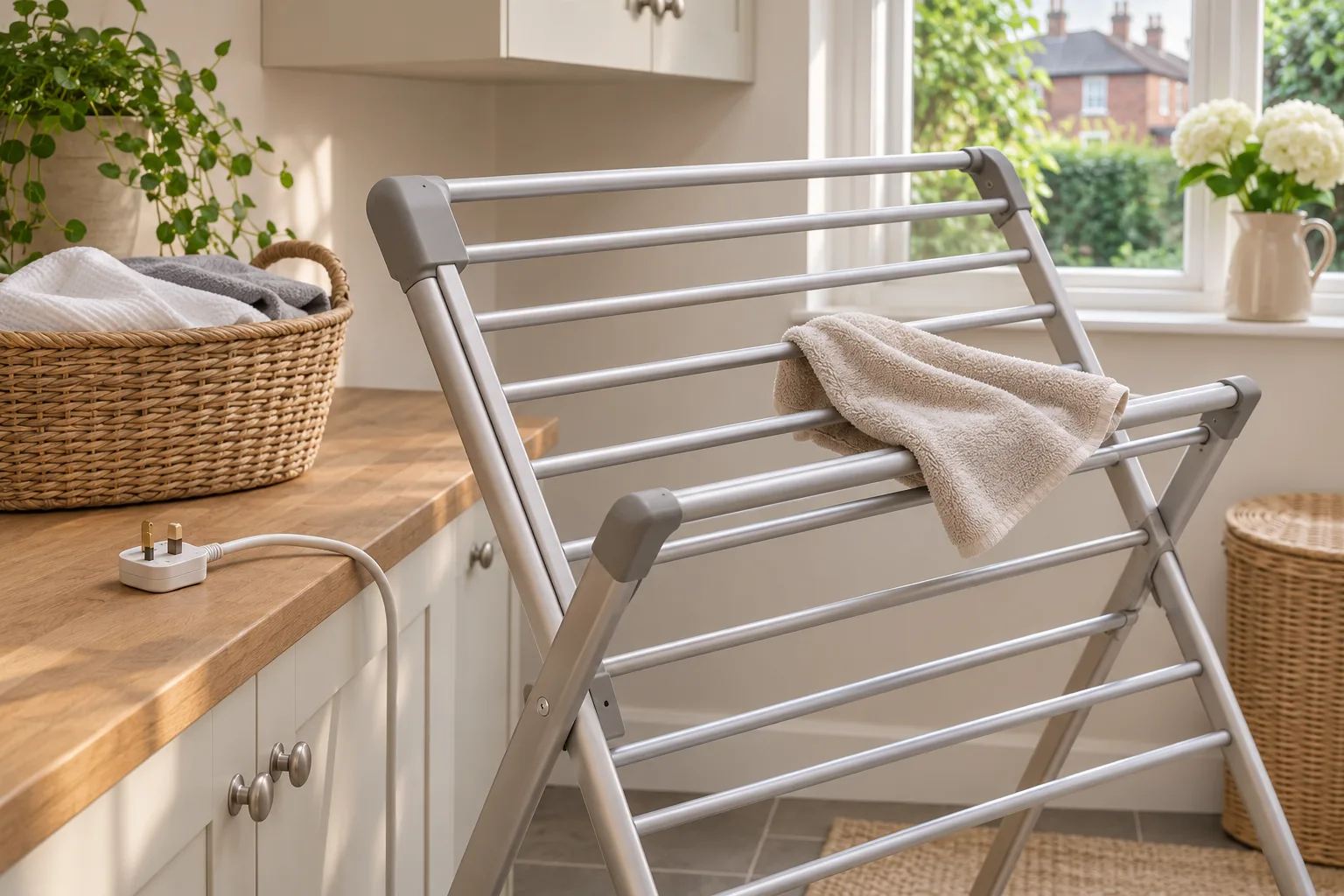
Remove lint or dust from the cooled rails with a soft, dry cloth. For marks that need more attention, use a lightly damp cloth on the parts the manufacturer permits, then dry them fully before reconnecting the plug. Don’t spray cleaner onto the frame or let water run towards joints, switches or the cable entry.
Skip abrasive pads and harsh cleaners that could damage the rail finish. If a sticky mark does not lift with the method in your manual, check with the manufacturer before trying a solvent or scraping it away. Warm bars work better as a drying surface when they are clean and your clothes have room around them.
Clean a fitted cover only as its label allows
Take the cover off once the airer is cool. Shake out loose lint, then follow the care label for that exact cover. Some covers can be machine-washed at a specified low temperature; others should only be wiped with a soft damp cloth. Don’t assume the cover from one brand has the same care instructions as another.
Dry the cover completely before refitting or folding it away. Check zips, seams and ventilation openings while it is off. A damaged cover or blocked vent is a reason to pause and follow the manufacturer’s replacement advice, not to use an improvised blanket. Our covered versus uncovered guide explains how the cover changes everyday use.
If yours is a drying pod
A fan-assisted pod has a heater unit as well as a frame and fabric enclosure. Dust and lint can gather around its air inlet or outlet. With the unit unplugged and cool, clean only the accessible surfaces the pod manual tells you to clean. Keep every designed vent unobstructed. Never open the heater housing or immerse it in water.
Let the fabric enclosure dry completely before packing it down. If the fan sounds unusual, airflow is weak or the unit repeatedly stops, switch it off and use the maker’s troubleshooting or service instructions. Don’t treat a pod like a simple heated rail rack.
Check the cable and frame as you fold it
Look over the plug, lead, switch and any timer for visible damage, heat marks or loose parts. Stop using the airer if you find damage; do not patch the cable yourself. Check that feet, shelves and hinges move as the manual describes, without forcing a stiff joint.
Fold the airer only after it has cooled. Avoid trapping the cable between rails or wrapping it tightly around a warm component. Store the dry airer and cover where they won’t be crushed or left damp. For a family load, the size guide helps you judge whether your current rack is being crowded.
Keep the drying area fresh too
Wiping the airer won’t deal with moisture from wet laundry. Keep the room’s normal ventilation working and watch for condensation around windows and walls. The government’s home ventilation guide identifies indoor clothes drying as a source of moisture.
Leave the airer the clearances required by its manual, and don’t block the airflow around a cover or pod. If the room is regularly damp after a load, change the ventilation or drying routine as well as cleaning the appliance.
Frequently asked questions
Can I wipe heated airer bars with a wet cloth?
Unplug the airer and let it cool first. Use a dry or lightly damp soft cloth only where your model’s manual permits, and dry the bars completely before using it again.
Can I put the cover in the washing machine?
Only if the care label for that exact cover allows it. Covers differ: some permit a low-temperature wash and others require wiping.
How often should I clean a heated airer?
Wipe visible dust and marks as needed, and check the cover, vents, cable and frame regularly. Follow any interval in your model’s manual rather than a fixed schedule for every product.
What if a drying pod’s fan sounds different?
Switch it off, unplug it and follow the manufacturer’s troubleshooting advice. Do not open the heater housing or continue using a unit with damaged wiring.
Can I store the airer straight after use?
Wait until the airer is cool and its cover is fully dry. Fold it as instructed and keep the cable clear of the hinges and rails.